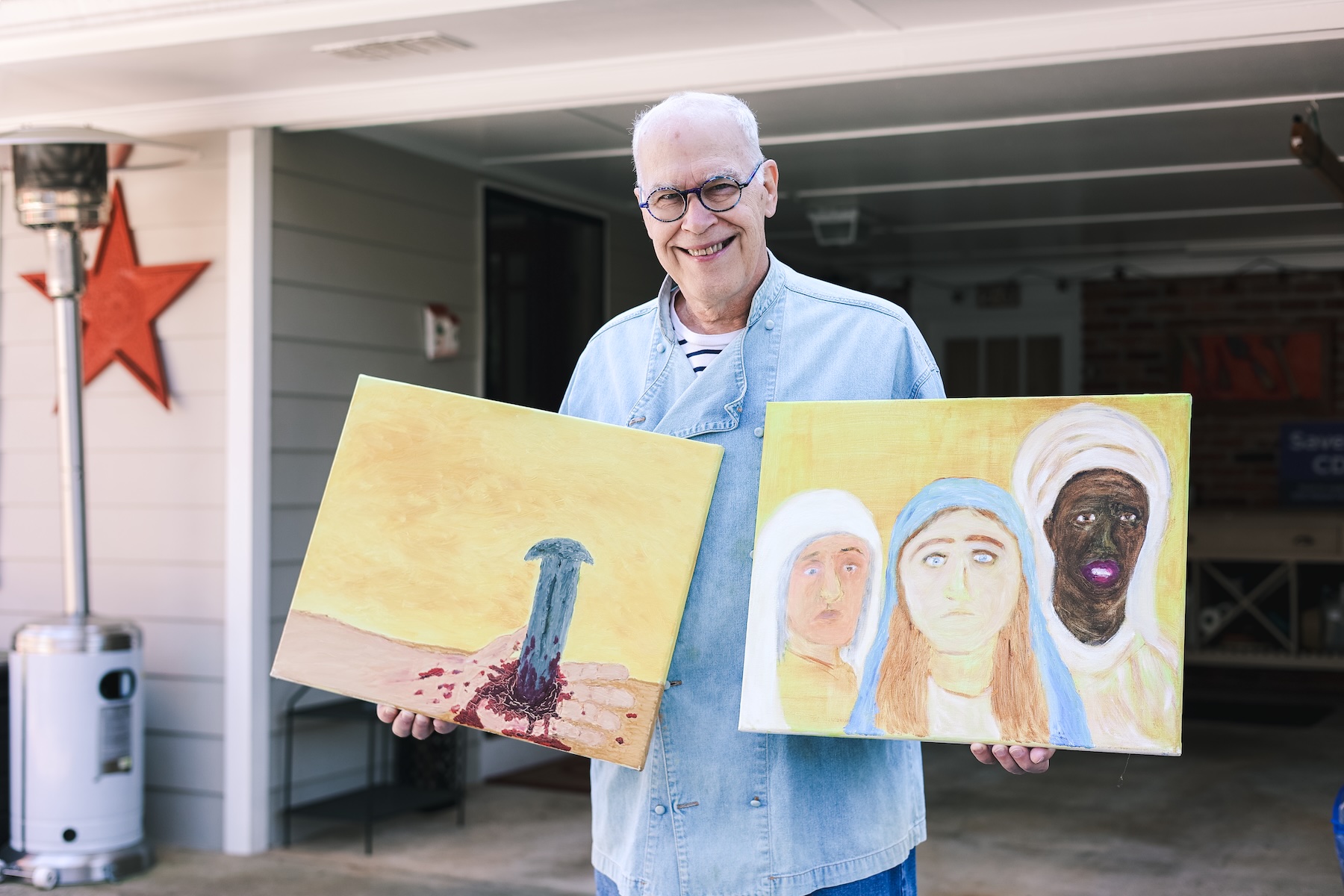
Walking the Stations of the Cross is a central devotion during Lent taken on by many Episcopalians. Since 2012, Larry Dugan has painted one of these images each year for meditation by parishioners at St. Bartholomew’s Episcopal Church in northeast Atlanta.
While Episcopal churches commonly invite visual interpretations of Christ’s journey to crucifixion, an artist usually stops after making a single one. This year, the 71-year-old Dugan’s painting journey completes its 14th and final station that is part of a Holy Week service scheduled Tues. March 31 at 6:30 pm.
In rough primitive style using mostly acrylics, he reflects personal struggles and current events amid the cadmium yellow hue of hope and the spirituality of blues and gospel music. He experienced surprise and serendipity too.
“Larry has had a true Lenten journey of many years, reflecting and working on his textures, his skills, his thought behind each one,” said Eric Still, who helped organize the earliest annual exhibit at St. Bart’s. “All of that has added a lot. If he had just done one, he would never have achieved that journey.”
In the following photos, Dugan describes the stories behind some of his Lenten artwork. These are presented out of order, which is how he painted them.
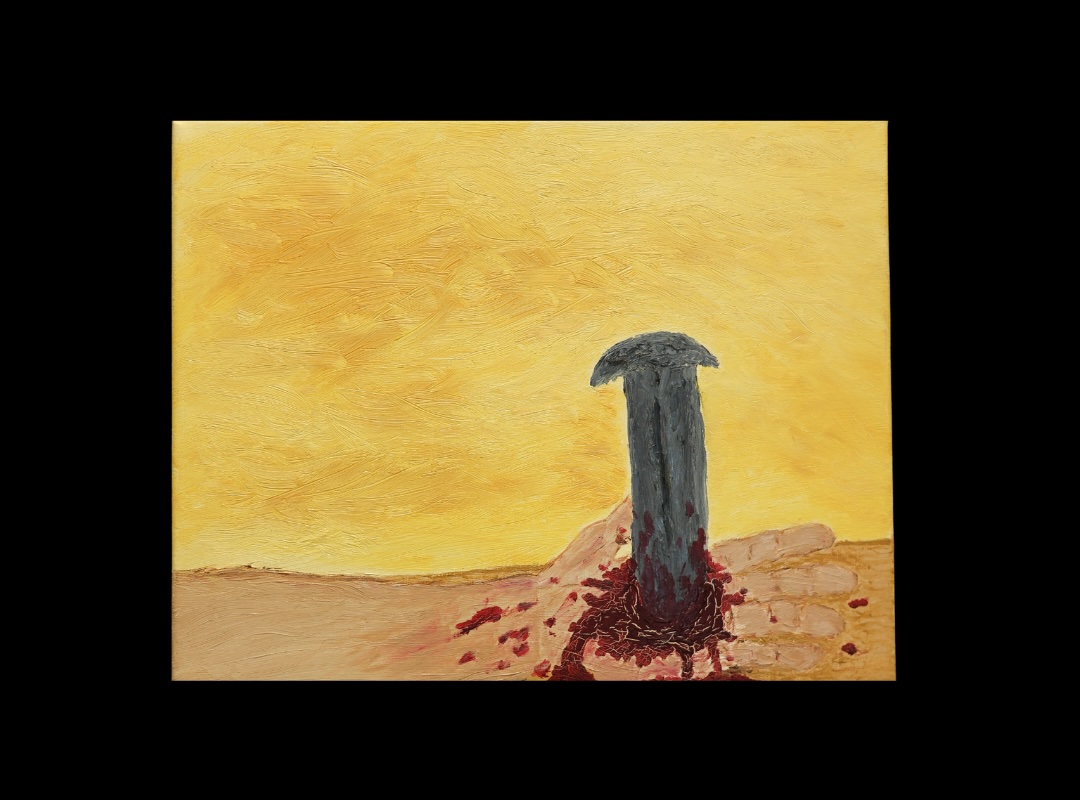
For Station 11 (Jesus is nailed to the cross), Dugan imagined Jesus as if he were meeting folk legend John Henry, and getting a big railroad spike driven into his palm.
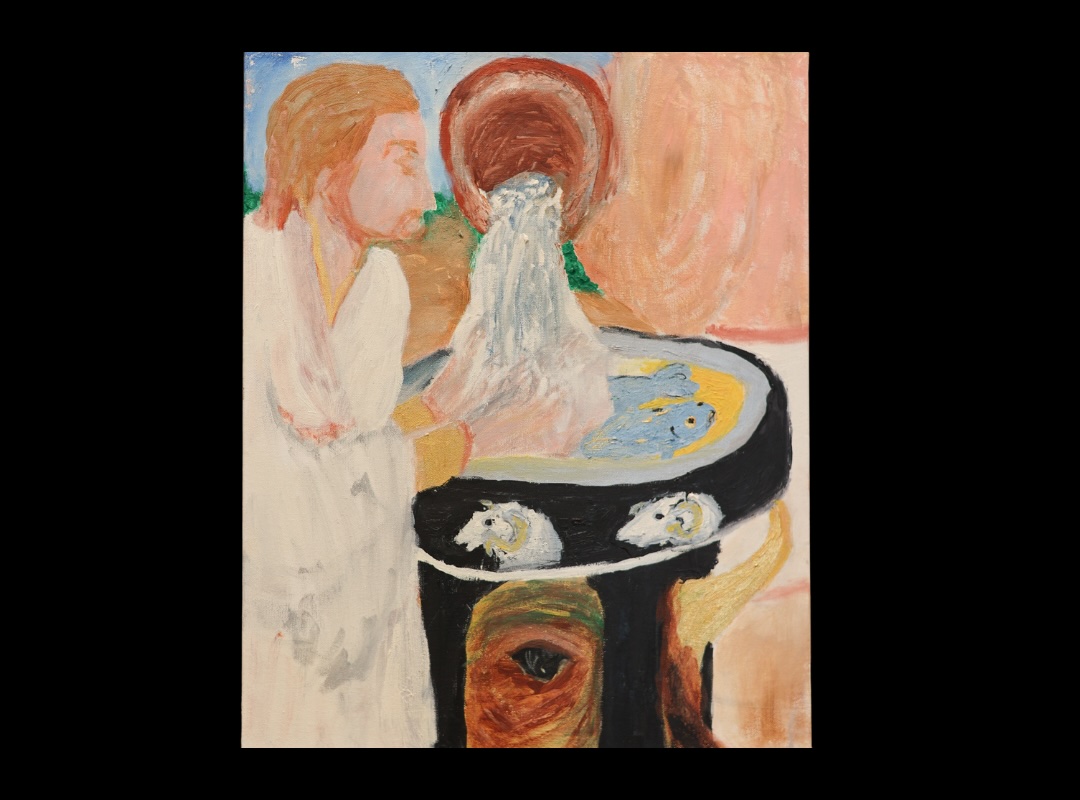
For Station 1 (Jesus is condemned to death), Dugan incorporated symbols from esoteric astrology: water urn, bull, ram,and a pair of fish.
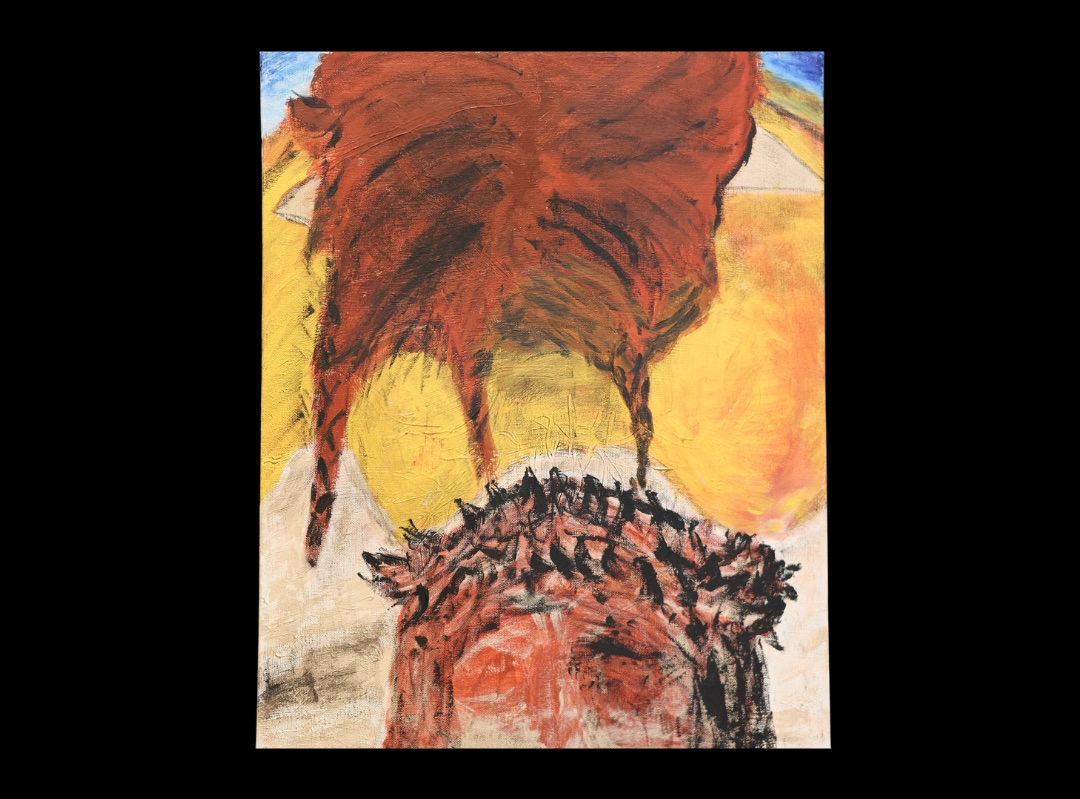
For Station 6 (A woman wipes the face of Jesus), Dugan was struggling to capture Jesus’ right eye, and when he smudged out an early attempt, what was left was … Jesus’ eye. “I had to stop and say that’s done,” Dugan said.
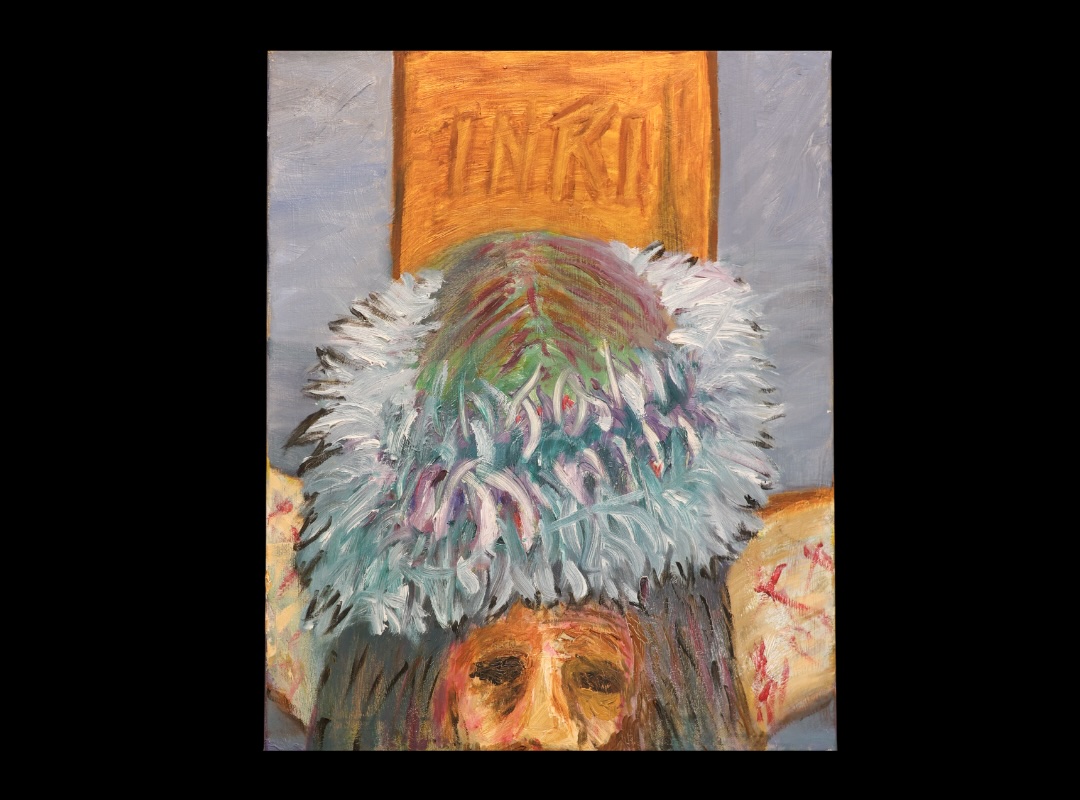
For Station 12 (Jesus dies on the cross, 2014), Dugan “wanted to show the opposite of the ‘Jesus with the six-pack abs’ icon, who after a three-hour yogic breathing exercise escaped to France with Mary Magdalene, established the model of feudal oligarchy and the Divine Right of Kings – ultimately culminating in his return, as he prepares to pass judgment... I wanted to show an exhausted and beat-up dying Jesus whose return will embody the love-wisdom aspect, and whose love shows no exclusion.”
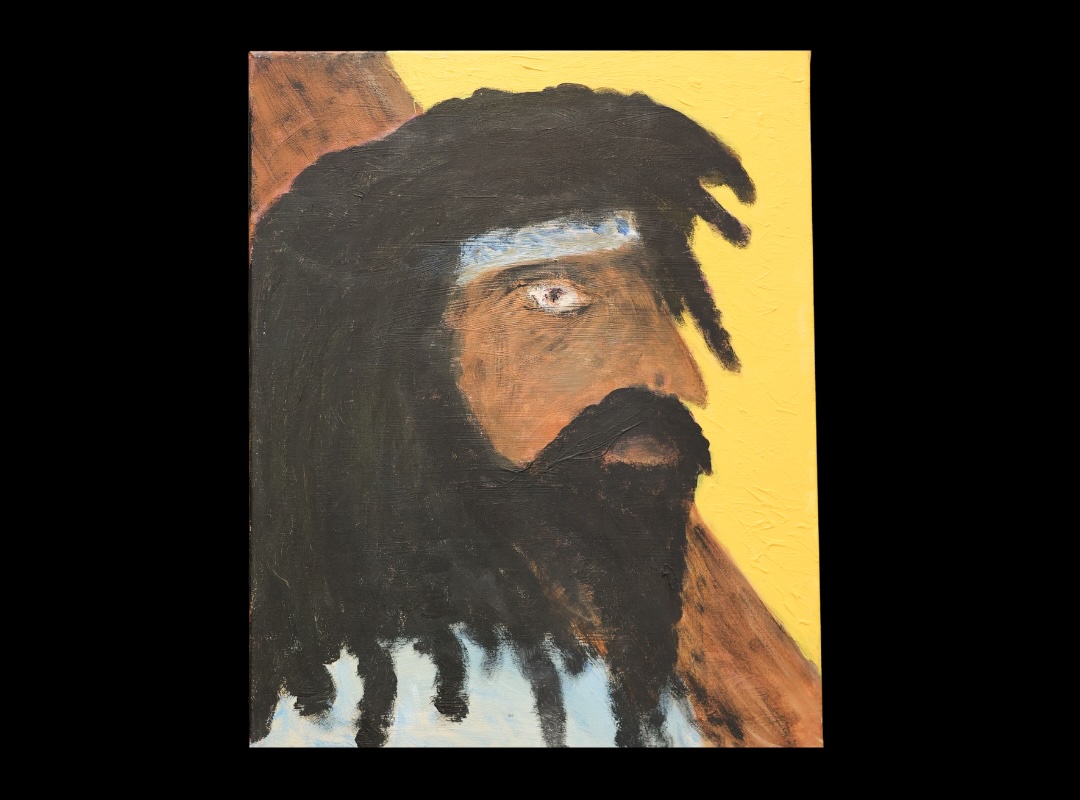
For Station 5 (the cross is laid on Simon of Cyrene, 2015), Dugan didn’t use a model. “I’d searched Cyrene for the appropriate ethnicity and might’ve been influenced by painting to reggae music as a number of 70s and early 80s reggae CDs live in my painting area, and I experienced a number of very good reggae concerts in Atlanta during that time.”
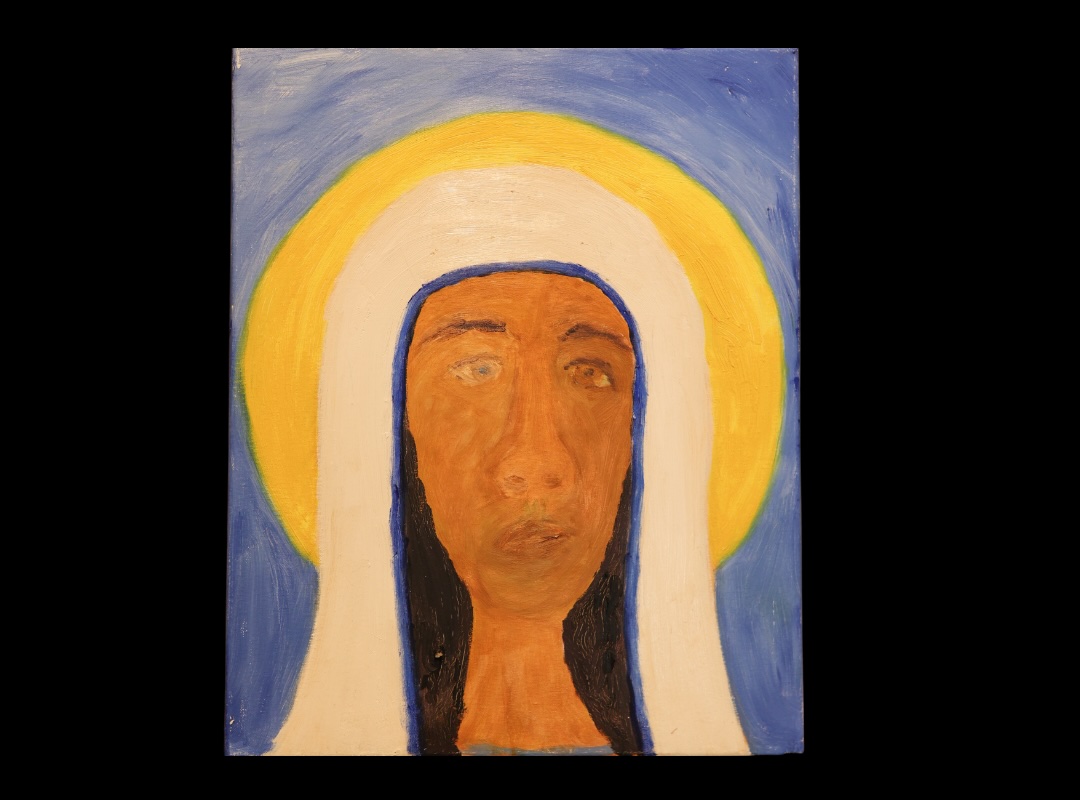
For Station 4 (Jesus meets his afflicted mother), Dugan painted Mary as a woman of color, loosely based on folk musician Rhiannon Giddens. This illustration proved prophetic when St. Bart’s called the Rev. Angela Shepherd as its first female and African American rector in 2018.
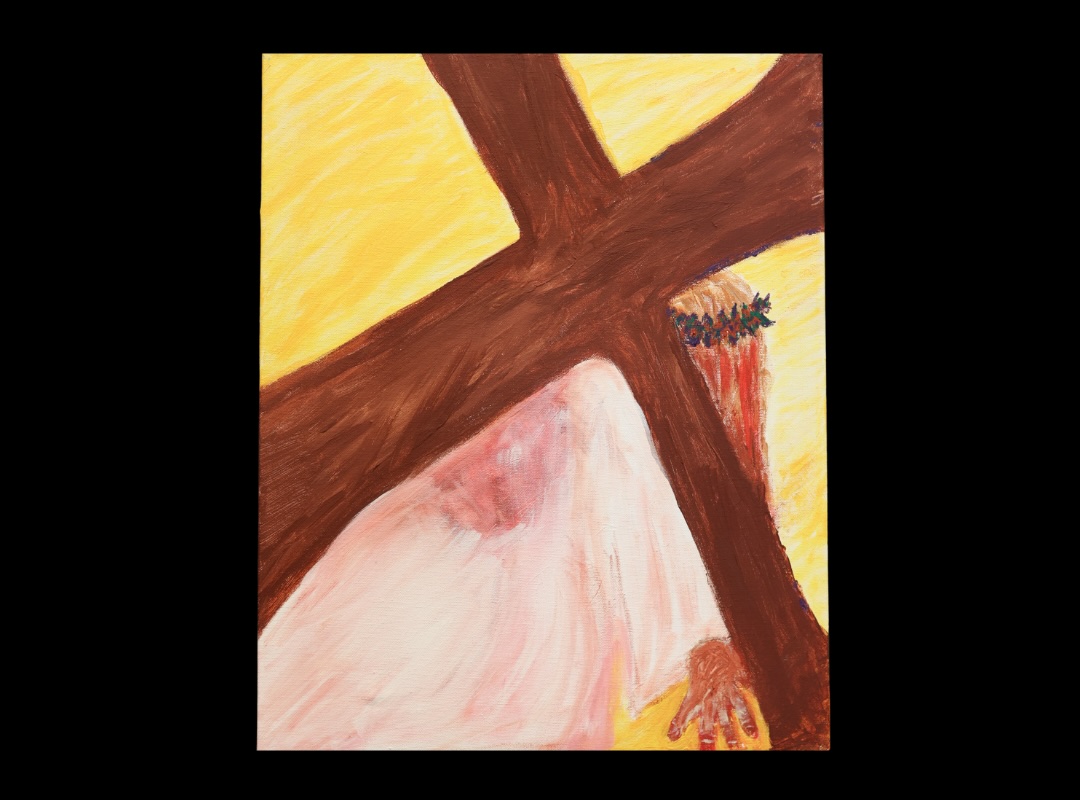
For Station 7 (Jesus falls a second time, 2019), Dugan depicted a blood-soaked Jesus on his knees, “but nevertheless he is bathed in the Light of the Soul.”
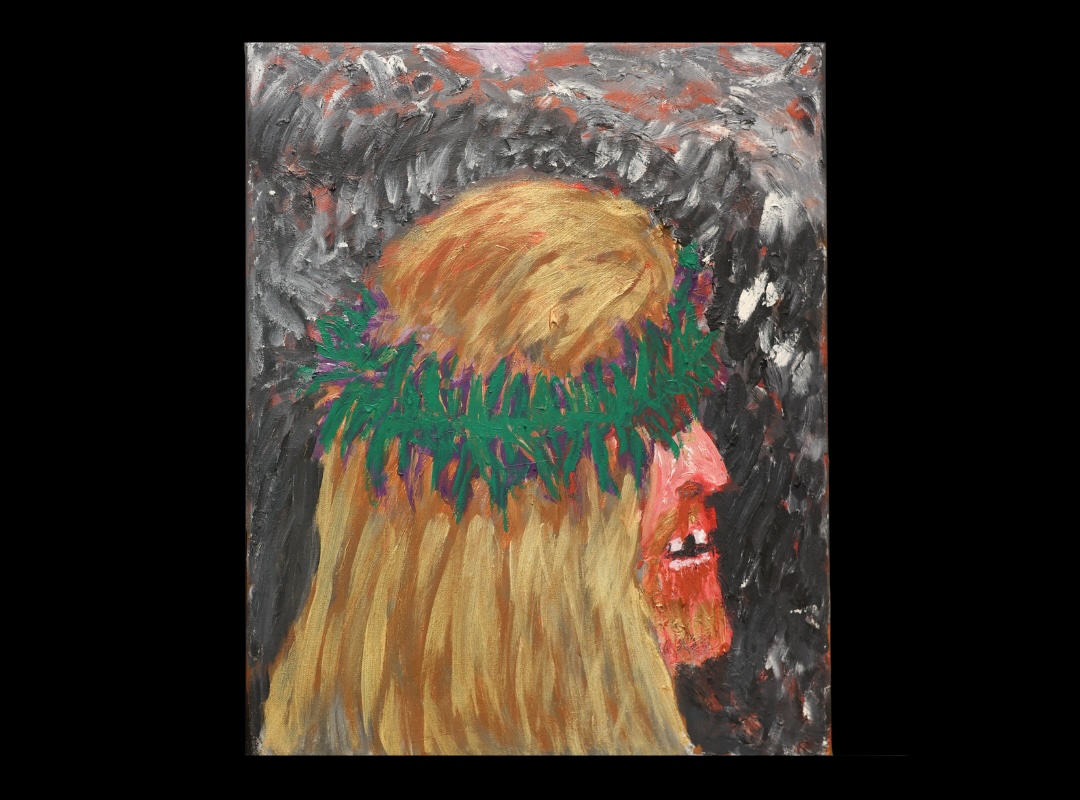
For Station 9 (Jesus falls a third time, 2020), Dugan described incorporating his pandemic dental woes, painting Jesus with a gapped smile and bloody nose. He added more light by making Jesus golden-haired, “but then worried that he looked like a Trumpian wrestler. However, the painting does exude a strong sense of pain, so the more I’ve thought about it during these trying times, the more appropriate it seems.”
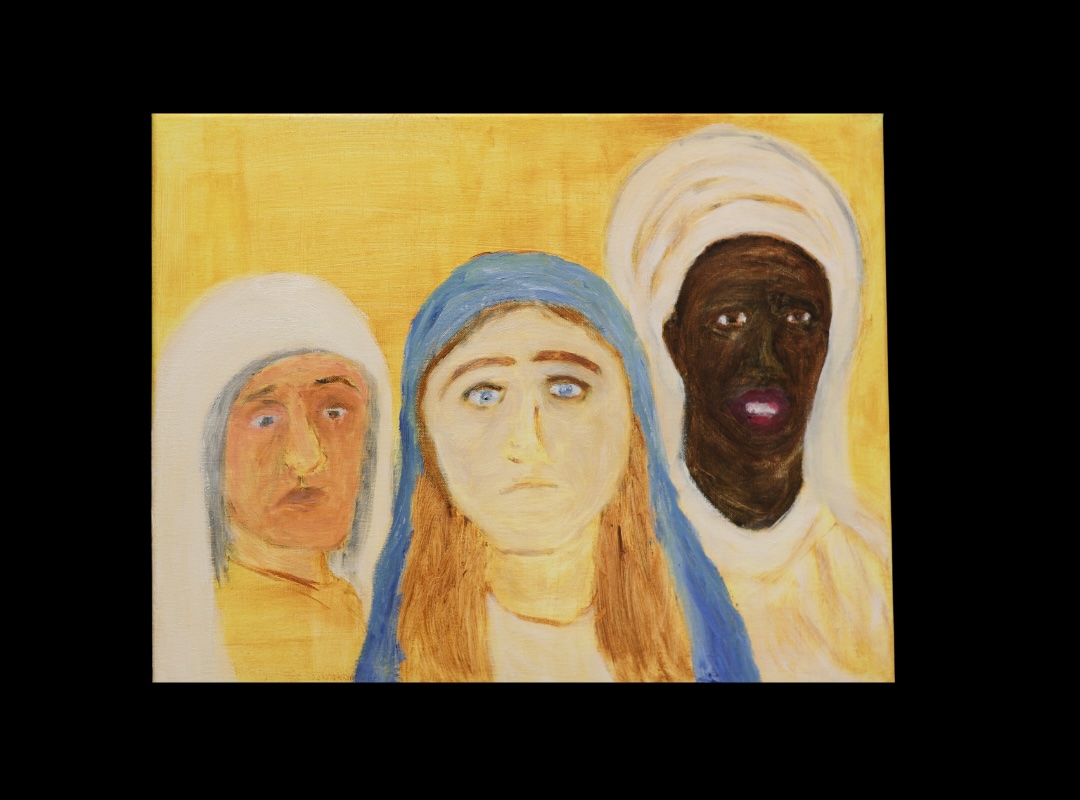
For Station 8 (Jesus meets the women of Jerusalem, 2021), Dugan described the influence of the Urantia Book on this and other Lenten art.
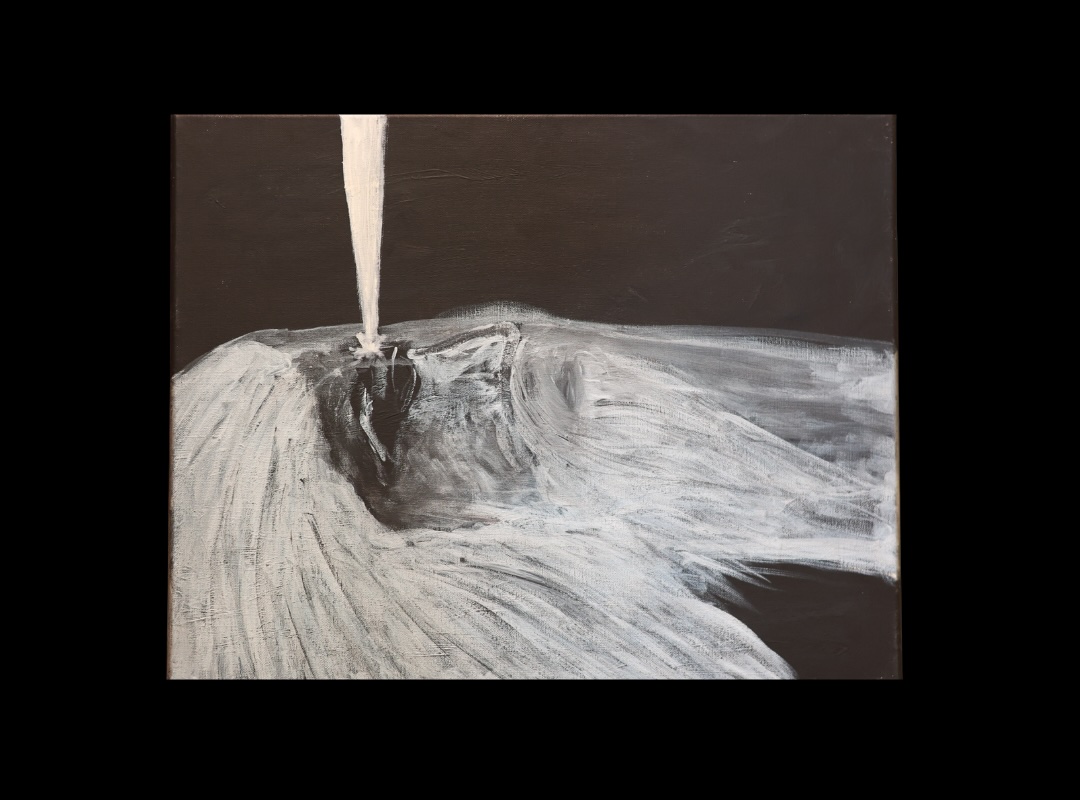
For Station 14 (Jesus is laid in the tomb, 2023), Dugan used monochrome tones and drew on his own suffering after his post-pandemic cancer surgery. The result: “an immortal transfiguration.”
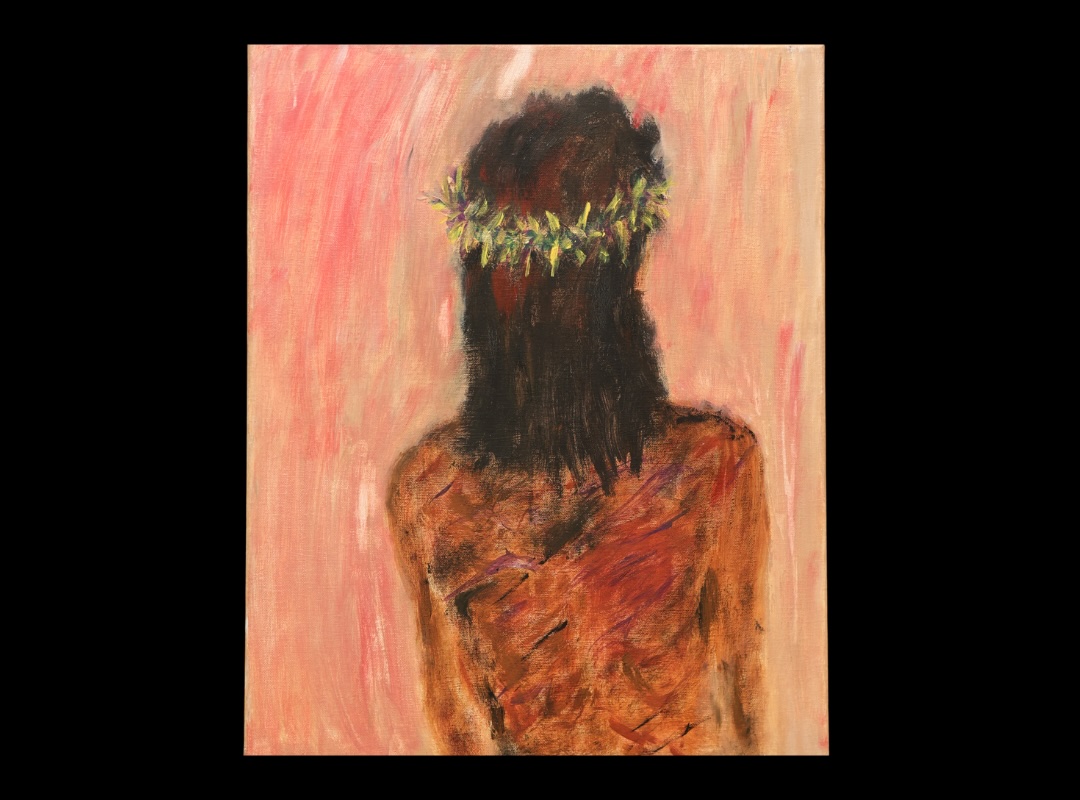
For Station 10 (Jesus is stripped of his garments, 2022), no wonder Dugan vividly painted Jesus' wounds. "I didn't know that I had cancer yet, but maybe I knew something was wrong," he said.
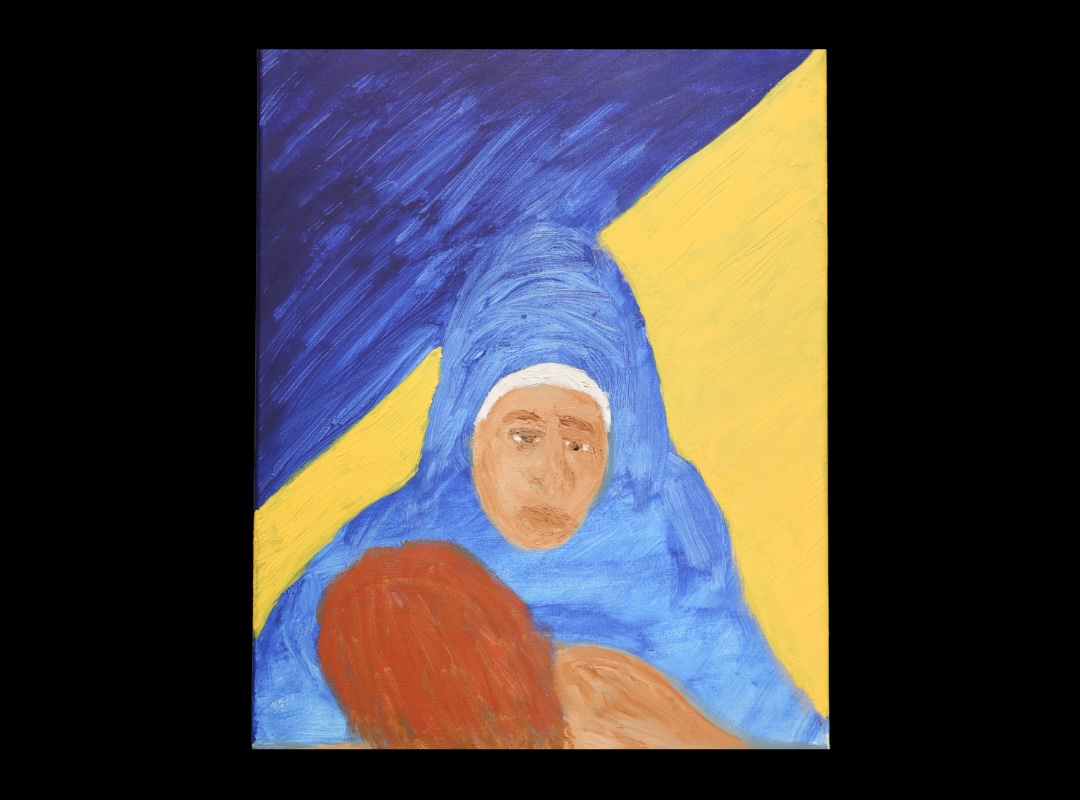
For Station 13 (the body of Jesus is placed in the arms of his mother, 2025), Dugan intended to use oil paints, “but the cancer drugs—I just didn't have the energy.” He then applied his favorite color— cadmium yellow — to a blue horizon, evoking the Ukrainian flag as the war with Russia was building. “I love seeing that color in it,” he said. “To me, yellow always brings hope.”
Called by Clergy Artist
Dugan painted his first canvas station after seeing the exhibit at St. Bart’s, which started in 2009 with the Rev. Dr. James D. Curtis, an artist who had served as St. Bart’s interim rector and stayed as a member.
The Stations of the Cross refer to 14 significant events at the end of Jesus’ life, starting with the moment he is condemned to die, through his burial.
At St. Bart’s, each artist who volunteered was asked to interpret a specific station and “reflect on what you’re doing and what are you going through,” recalled Still, a visual and textile artist who is now a member at Saint Anne’s.
Dugan, a native Atlantan who grew up during segregation in a Catholic family of artists, had been fascinated by the Stations carvings at the Cathedral of Christ the King, about four miles west of St. Bart’s. He enjoyed making underground newspapers and sharing mixtapes and teaching himself harmonica and guitar.
Dugan’s creativity is more spiritual than religious. He recalled “first hearing the voice of God” on the public address system in Atlanta Union Station, in a mellifluous African American recitation of the rail destinations (“Nashville, Louisville, Indianapolis, Chicago!”). Gospel and blues music deepened his experience of the divine. “Music touched my soul loose,” he said.
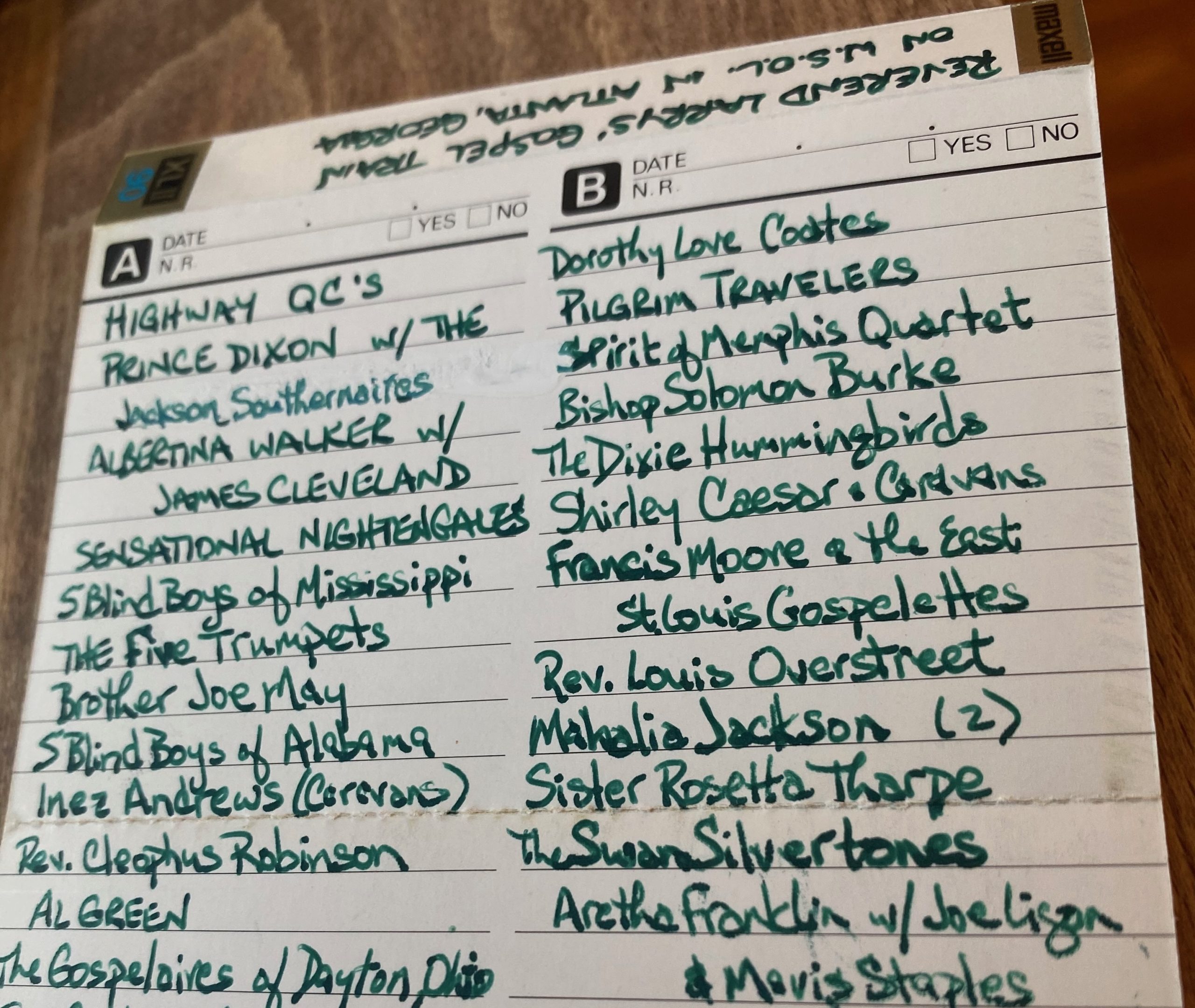
In homage, he created an alter ego with a mock radio show “Rev. Larry’s Gospel Train,” shared on cassette recordings he made for friends.
In a college painting class, he was intimidated by skilled artists, but after a divorce he picked it up as a relaxing pastime that didn’t need to be exact. “Painting allowed me to open up,” he said. “It allowed me freedom.”
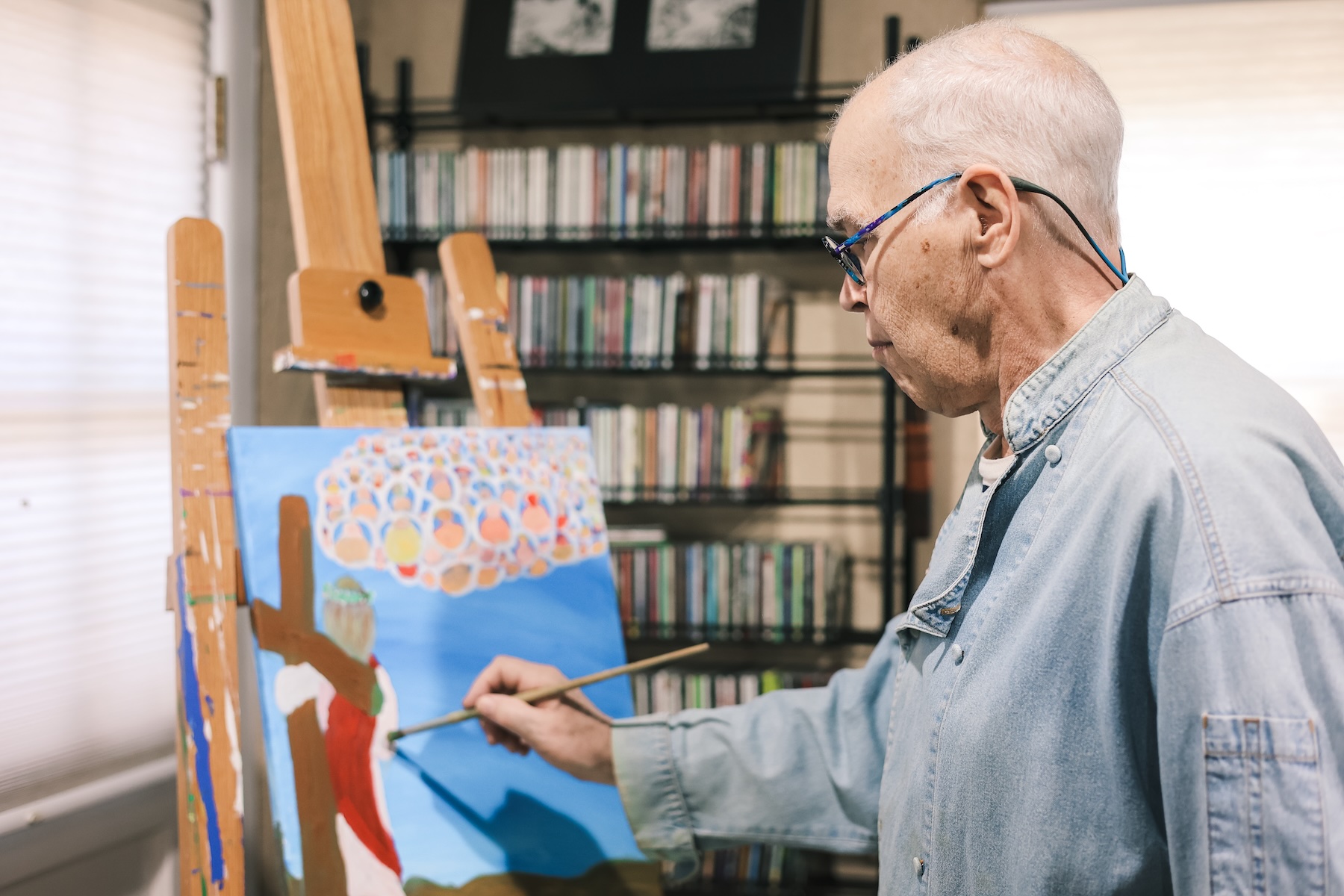
At St. Bart’s, surprise and delight in each year’s exhibit inspired the next slate of St. Bart’s artists—even as the parish transitioned through clergy, adapted to the pandemic, and experienced declining attendance.
“It’s a really cool way to really have each station in each year mean something different,” said Larry’s son, Riley Dugan, the associate director for middle school ministries at The Cathedral of St. Philip. “I’ve really admired that at St. Bart’s. It makes The Stations a lot more personal, and every year is something different, instead of just walking the same Stations.”
Not Giving Up Chocolate
Before Dugan retired in 2025, his work as a damages expert witness for securities arbitration required “typing in numbers all day and testifying under oath to their accuracy under cross-examination by attorneys representing Wall Street firms.”
“Painting is so completely different, and although I could only bring myself to do one painting in a year, that made it worth it,” he said. “It also made it a special thing for Lent, rather than give up chocolate.”
While his choice of paint on 16×20 canvas remained steady, his interpretation of each station created anticipation. Dugan didn’t go in order and regrets not documenting the completion dates.
After Ash Wednesday in February, Dugan descended as usual to his basement studio. “It’s a no feedback zone,” his wife Susan said.
He joked about the 14 years of commitment and structure: “They say, ‘Do you paint?’ Well, I paint one painting a year. I’m a religious painter.”
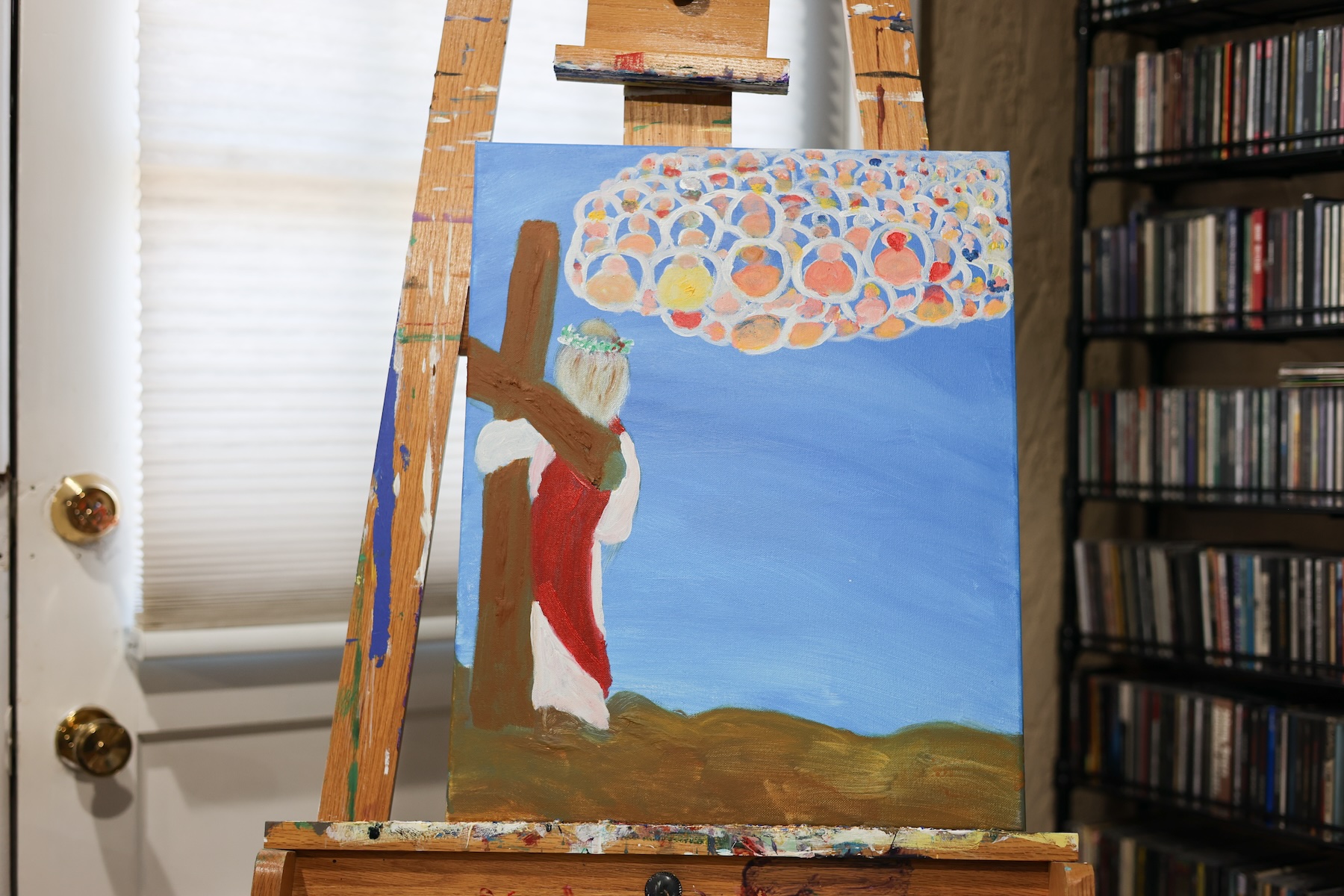
His final one is the Station 2 — Jesus Takes Up His Cross. On a white base topped with blue and sienna, his image is “less about the Cross than his contemplation of humanity,” Dugan said.
“This painting is of Jesus looking out towards humanity as a kingdom of souls / spirit confined in their ring-pass-nots awaiting our future redemption,” he wrote in his artist statement.
“Theosophical writings describe the ring-pass-not as ‘the boundary circumscribing the manifested world of matter, marking the limit beyond which consciousness cannot pass until a certain stage of evolution is reached’ and that ‘it serves to separate the world of spirit from the world of matter, containing souls that still labor under the illusion of separateness’ – also referred to as ‘the prisoners of the planet’ awaiting the return of The Christ.”

Dugan’s full set of canvases include the three images of Jesus falling. Recalling the first one (Station 3, Jesus Falls the First Time), “feeling playful” led him to paint Jesus’ giant foot crushing an Easter egg.
“I thought that was cool, because if you stepped on a big Easter egg, you could certainly stumble,” Still said. “That was a great interpretation because Christ’s journey to the cross was not a pretty event, right?”
The colorful egg, painted in relief, was still drying when Dugan delivered it to St. Bart’s. One parishioner argued that the station showed Jesus slipping on a cake. A little boy at St. Bart’s, Jack Almond, couldn’t resist poking the wet paint, creating a hole. When the paint finally dried, his impulsive indentation actually made the egg look more like an egg.
That was one of Dugan’s first paintings, and that boy is now an adult.