
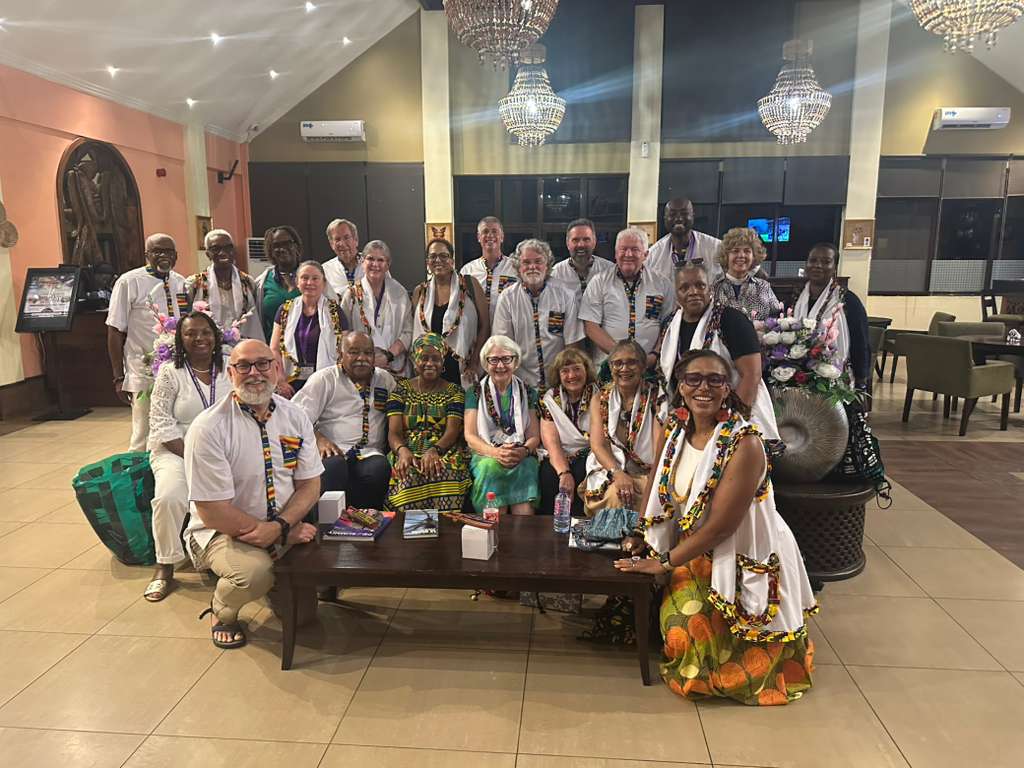
Home from their April journey to the Anglican Diocese of Cape Coast in Ghana, 23 travelers from the Episcopal Diocese of Atlanta and the Diocese of South Carolina report a profoundly deepened commitment to global partnership and racial reconciliation.
The 11,000+ mile historic sixth trip—the first officially housed within the Absalom Jones Episcopal Center for Racial Healing (AJECRH)—was a holy journey into truth-telling and relationship.
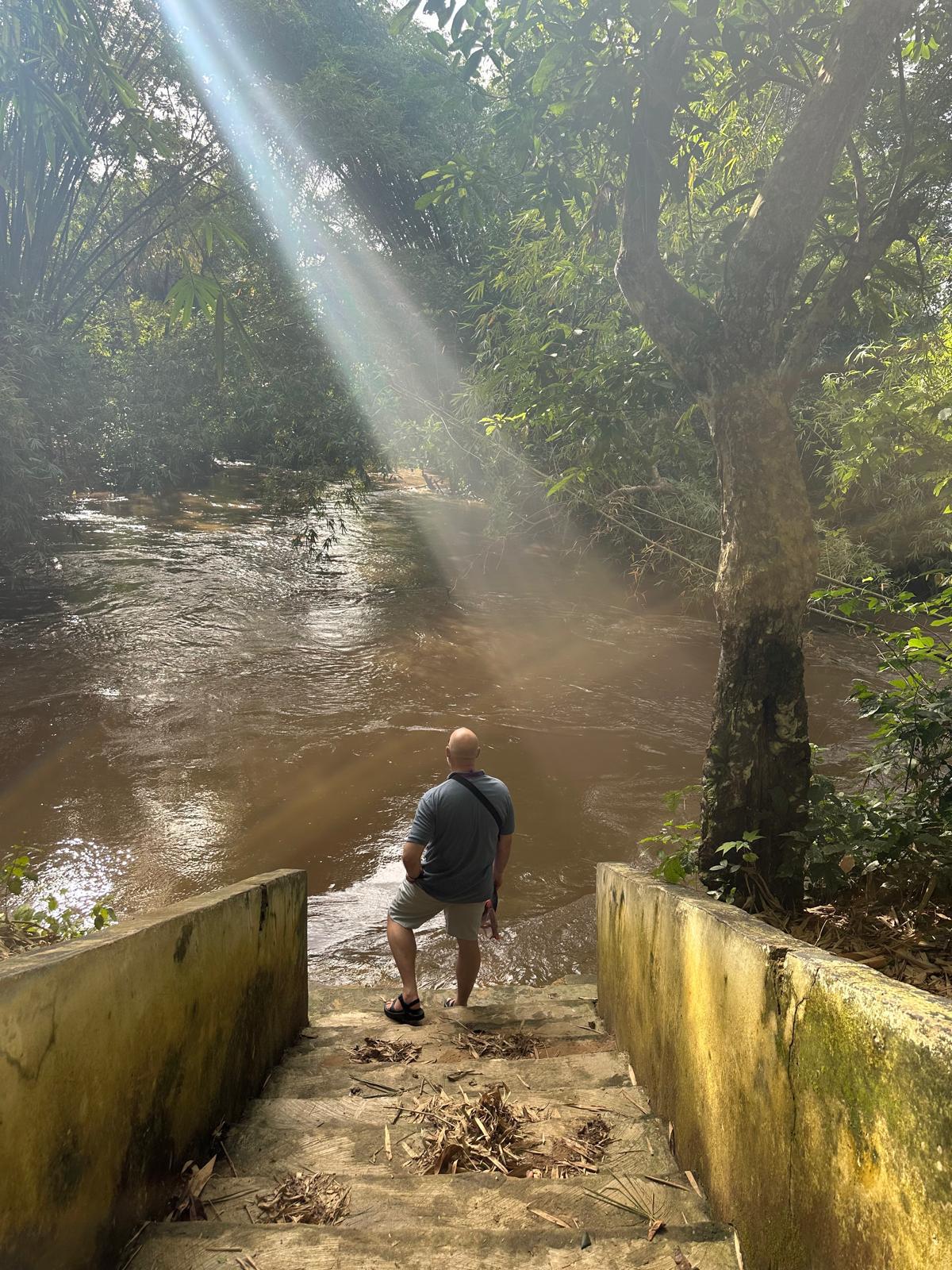
“We felt the Holy Spirit resonate three important movements throughout our preparation and on the trip: Respect, Realign, and Restore,” said The Very Rev. Jeff Jackson, pilgrimage co-leader and rector of St. Margaret’s, Carrollton. “We wrestled with these concepts and used each one as a lens to reflect on the horrors of the transatlantic slave trade and on the encouraging partnership we have with the Diocese of Cape Coast.”
For Dr. Beth-Sarah Wright, Acting Executive Director of the AJECRH, the voices of the travelers bring these three theological movements to life. “To respect human dignity in the stories that have shaped us; to realign with God’s vision for humanity through our faith and our commitment; and to restore justice in the world around us,” she said.
With the overwhelming success of the 2026 cohort, the AJECRH announced plans to expand opportunities for the Ghana pilgrimage to other interested communities beyond the Diocese of Atlanta, broadening the reach of this vital reconciliation work.
A 27-minute documentary by participant Rev. Scott Harding, rector of St. Matthias Episcopal Church in Toccoa, captures the sights and sounds of this transformation. In the film, Cape Coast Bishop Victor Atta-Bafoe challenges the group with a parallel spiritual framework: remembering the ancestors, repenting for the atrocities of the past, and reimagining a future built on God’s mercy and justice.
Respect and Remembering: Facing the Truth of History
The first movement of the journey required the travelers to confront the devastating truths of the transatlantic slave trade. The group traced the final steps of captured men, women, and children who were shackled and forced to march up to 600 miles to the coast.
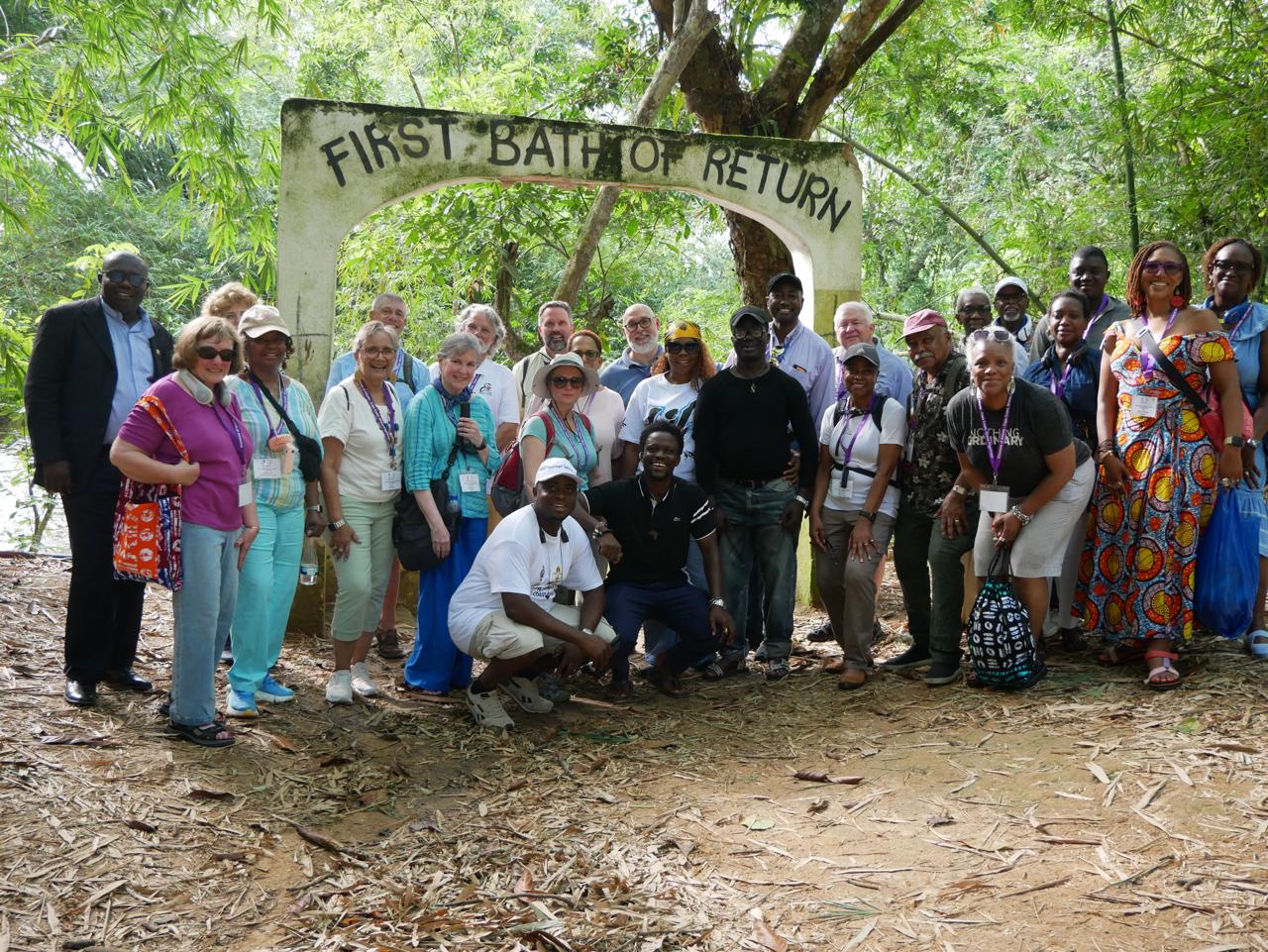
The group’s first stop was a sacred clearing surrounded by dense bamboo known as the Assin Manso Ancestral Riverside, or the “Last Bath,” where captured Africans took their final bath on African soil before being sold. The Rev. Mother Kenya Thompson, vicar of the Church of the Common Ground in Atlanta, recalled the stark transition where the life-giving flowing water of an earlier river turned murky and stagnant.
“I immersed my foot in the water, hoping and praying that God might allow me to feel, even for a moment, what they must have felt so long ago,” Thompson reflected.
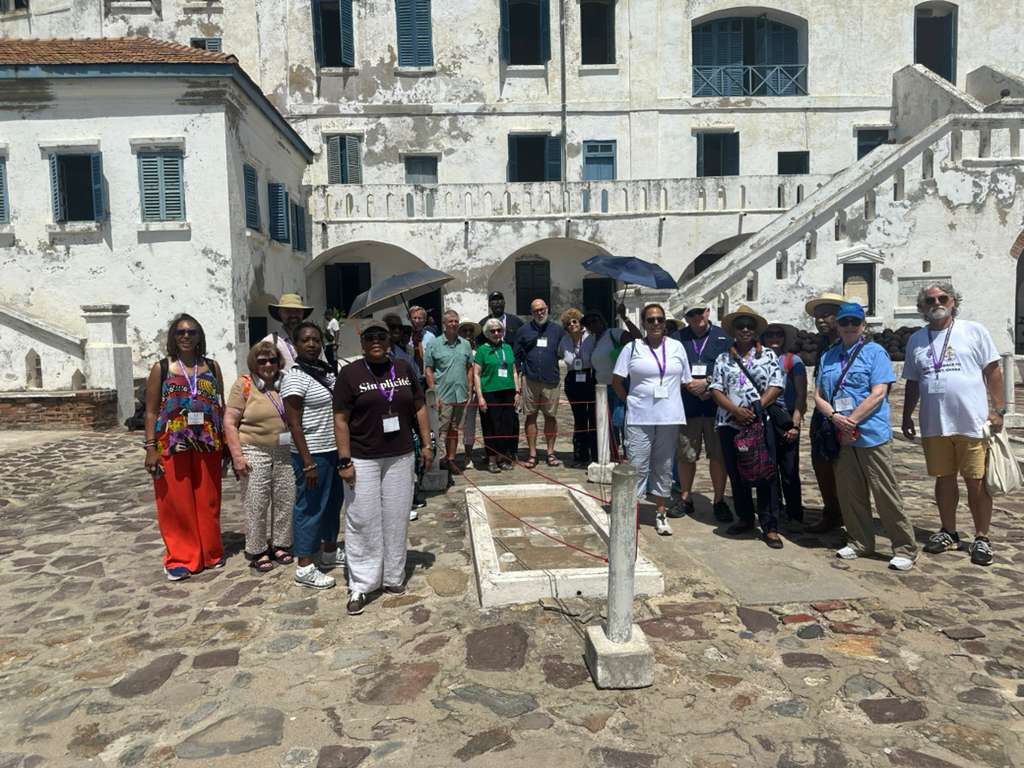
From the river, the journey moved to the towering white walls of Cape Coast Castle and Elmina Castle. In his documentary, Harding captures the claustrophobic, dark dungeons where bodies were packed tightly together, contrasted sharply against the governor’s airy, light-filled quarters directly above.
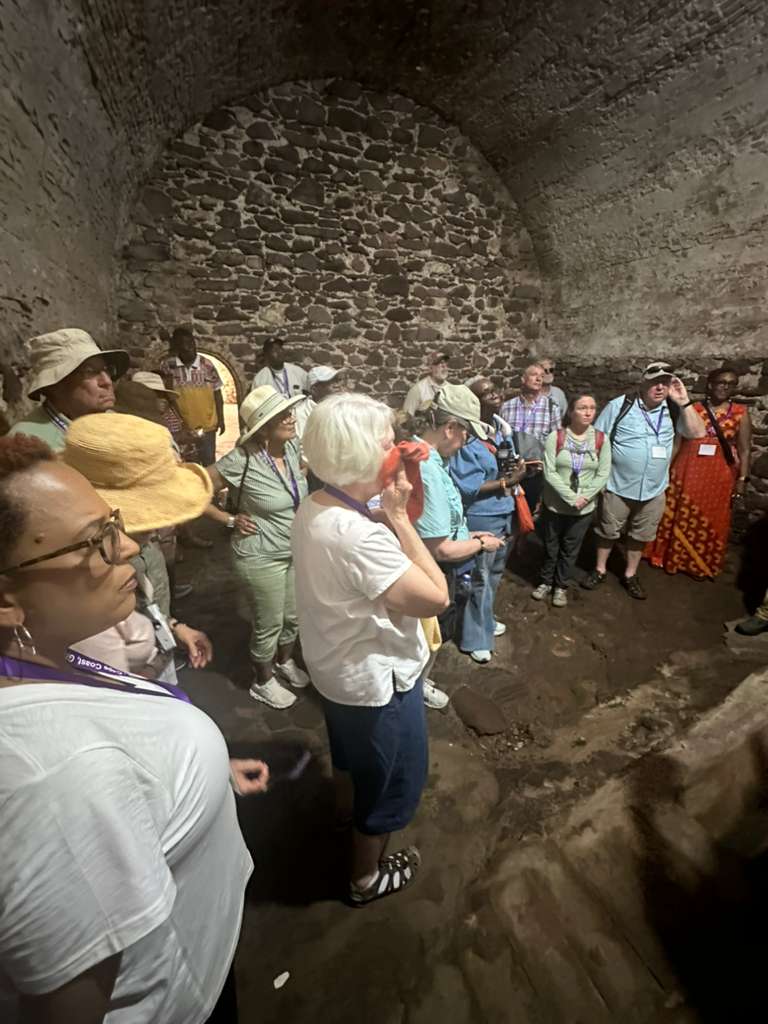
Equally jarring was the moral contradiction of a Christian chapel constructed directly on top of the slave dungeons at Elmina Castle.
“People worshiped and prayed above a place where dignity, hope, and humanity were being stripped away,” Thompson said. “I cannot shake that reality.”
Clavel Gittens, a parishioner at St. Simon’s Episcopal Church in Conyers, felt the ancestral connection deeply. “I ache for my ancestors, each and everyone; the nightmare they’ve been subjected to, the sacrifice, the struggle, the strength to stay alive,” Gittens shared.
“How is it that I even made it here; through this lineage? I want to give an unending hug to each one of my ancestors. Oh, the enormous gratitude is unexplainable. I ask that they live through me as we heal together.”
“Strategic Manipulation”
Faced with the literal and metaphorical depths of this historical atrocity, participants looked closely at the intentional, legal frameworks created by European powers to enforce subjugation.
The Rev. Canon Ramelle McCall, Canon for Justice and Future Leaders for the Diocese of South Carolina, noted the profound disturbance of analyzing how nations like Portugal, Denmark, the Netherlands, and Britain strategically manipulated local groups under the guise of helping Africans build better lives.
“The outside ethnic groups that came to Ghana didn’t see the local people as beloved children of God, full of dignity and deserving respect,” McCall reflected. “Instead, they viewed them as tools for wealth—useful for agriculture, building houses, and other exploitative purposes—treating them less than human. It is also shocking to realize that all these atrocities were legal at the time.”
Confronting this intentional, legalized stripping of human dignity reframed the concept of racial prejudice.
“It helped me see racism as a multifaceted sin,” McCall continued. “Racism is layered; it’s not only about skin color but also involves insecurity, fear of differences, ignorance, misinformation about others, and a lack of respect and dignity for those who do not look like you. Change takes lifetimes. So, I ask myself—and all of us—what am I called to do in my lifetime?”
Realign and Repent: Processing Joy, Sorrow, and Grace
Realigning with God’s vision required the group to hold immense joy and devastating sorrow simultaneously, a balance modeled by their Ghanaian hosts.
“On our first morning, we were welcomed to the Diocese of Cape Coast in grand fashion,” Thompson said, noting the drums and dancing captured vividly in Harding’s video. “Many of us were still riding an emotional roller coaster—standing at the intersection of joy and pain… while also being profoundly moved by the hospitality, warmth, and resilience of the Ghanaian people who welcomed us with open arms.”
Gittens used the landscape to describe the enduring impact of history: “A tree ripped from its roots will leave a gaping hole in the ground. It is said that the void left behind is essentially a permanent scar in the landscape. I think the lasting impact of slavery is evident throughout. However, resilience is also evident.”
Significantly, the journey focused on education rather than animosity. “Again and again, our guides reminded us: ‘It is not our goal to blame people for the past. We want to educate people so that history will not repeat itself,’” Thompson recalled.
Harding’s documentary notes that Bishop Victor provided four benchmarks for true reconciliation following the castle visits: an awakening of truth that refuses to sanitize evil, a journey through prayers of grief and lament, the courage of repentance, and a total commitment to transformed living.
This process of alignment was uniquely heightened by the historic inclusion of the Diocese of South Carolina delegation. Standing inside the dark spaces of Elmina and Cape Coast, the South Carolina team recognized that they were carrying vastly different histories into the exact same physical locations.
“Among us were descendants of the enslaved and descendants of enslavers,” noted the Right Rev. Ruth Woodliff-Stanley, Bishop of the Diocese of South Carolina. “Yet we discovered that honest conversation rooted in mutual dignity can become holy ground. What struck me most was not a false collapsing of our different experiences, but the courage to remain present to one another within them.”
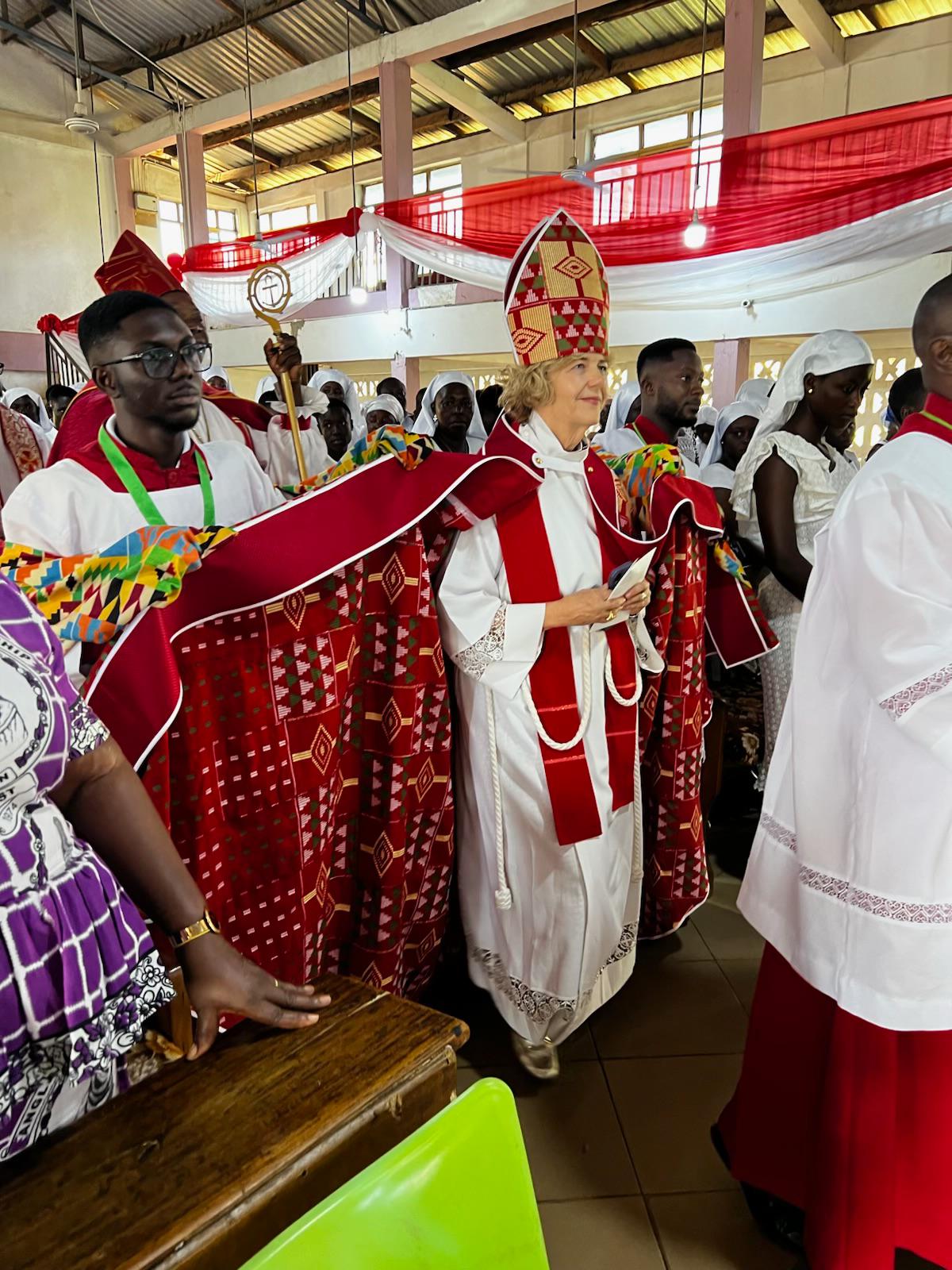
Woodliff-Stanley reflected that this shared vulnerability became a vital through line back to the baptismal covenant.
“We were able to go deep together in conversations that honored painful truths while also recognizing the deeper truth that binds us: our shared grounding in the Baptismal covenant and our common identity as beloved children of God,” she said. “Again and again, I found myself reflecting on how the Gospel calls us not away from difficult history, but through it—toward reconciliation shaped by truth, humility, and love.”
Looking to 2027: Deepening the Regional Bond
The collaborative presence of the South Carolina delegation establishes an important foundation as both dioceses prepare for 2027, which marks the landmark 10th anniversary of the companion diocesan partnership between Atlanta and Cape Coast.
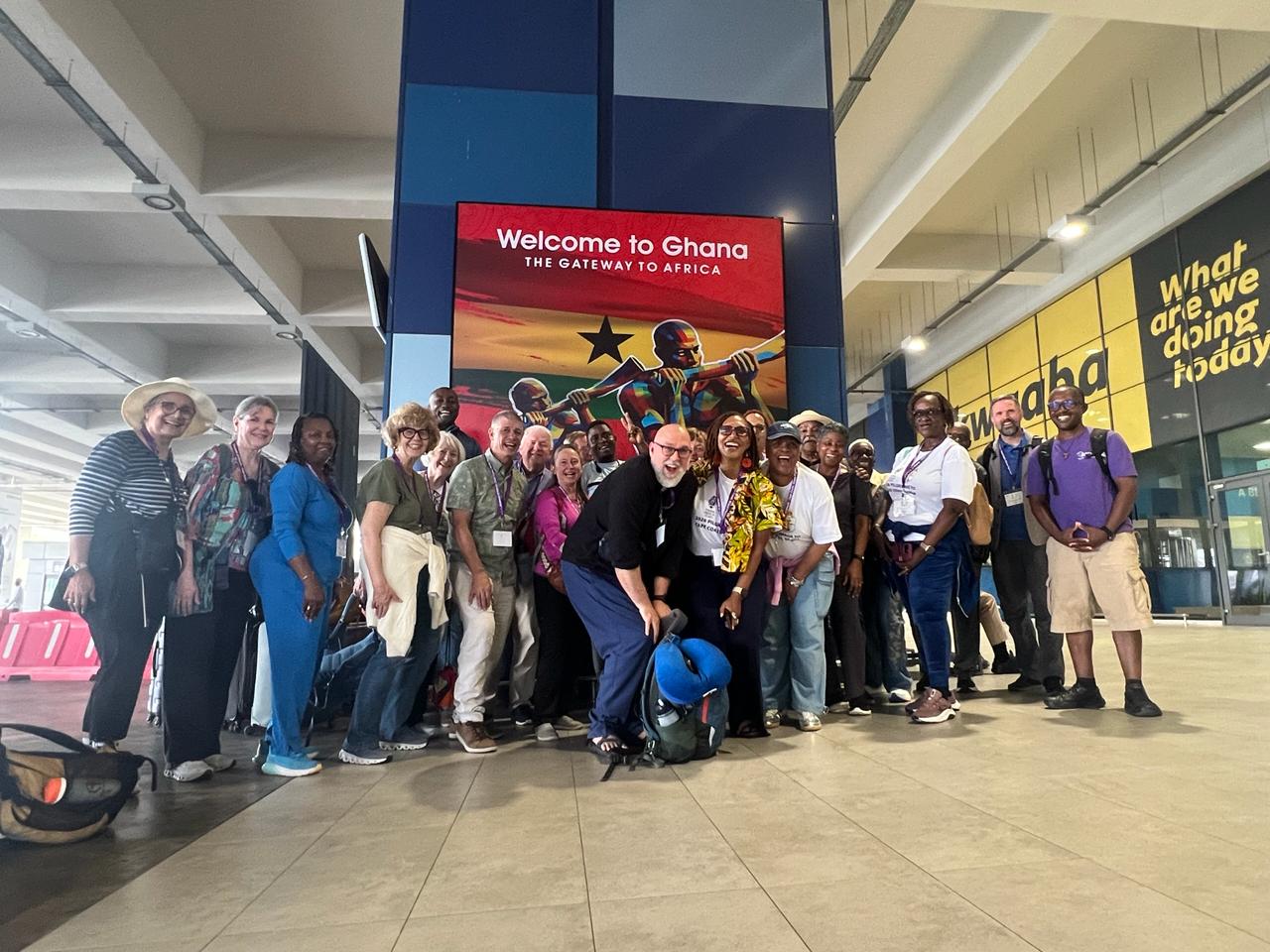
To honor this milestone, the upcoming 2027 journey will be intentionally shared with participants from the Diocese of South Carolina. As a critical part of the spiritual preparation, organizers are planning a smaller, preparatory pilgrimage to South Carolina prior to departure. This groundwork will help travelers deepen their historical understanding of the transatlantic connections before witnessing the landscape of Ghana firsthand.
Restore and Reimagine: “From Memory to Mission”
The final movement, Restore, was visible in the thriving, sustainable ministries run by the Diocese of Cape Coast, which the group visited, supported, and documented.
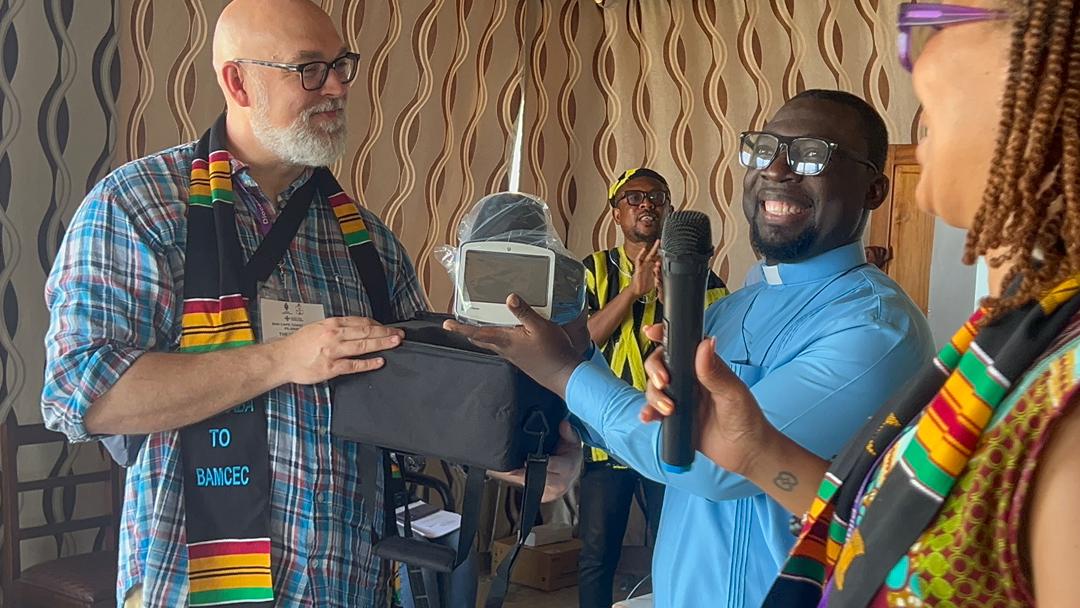
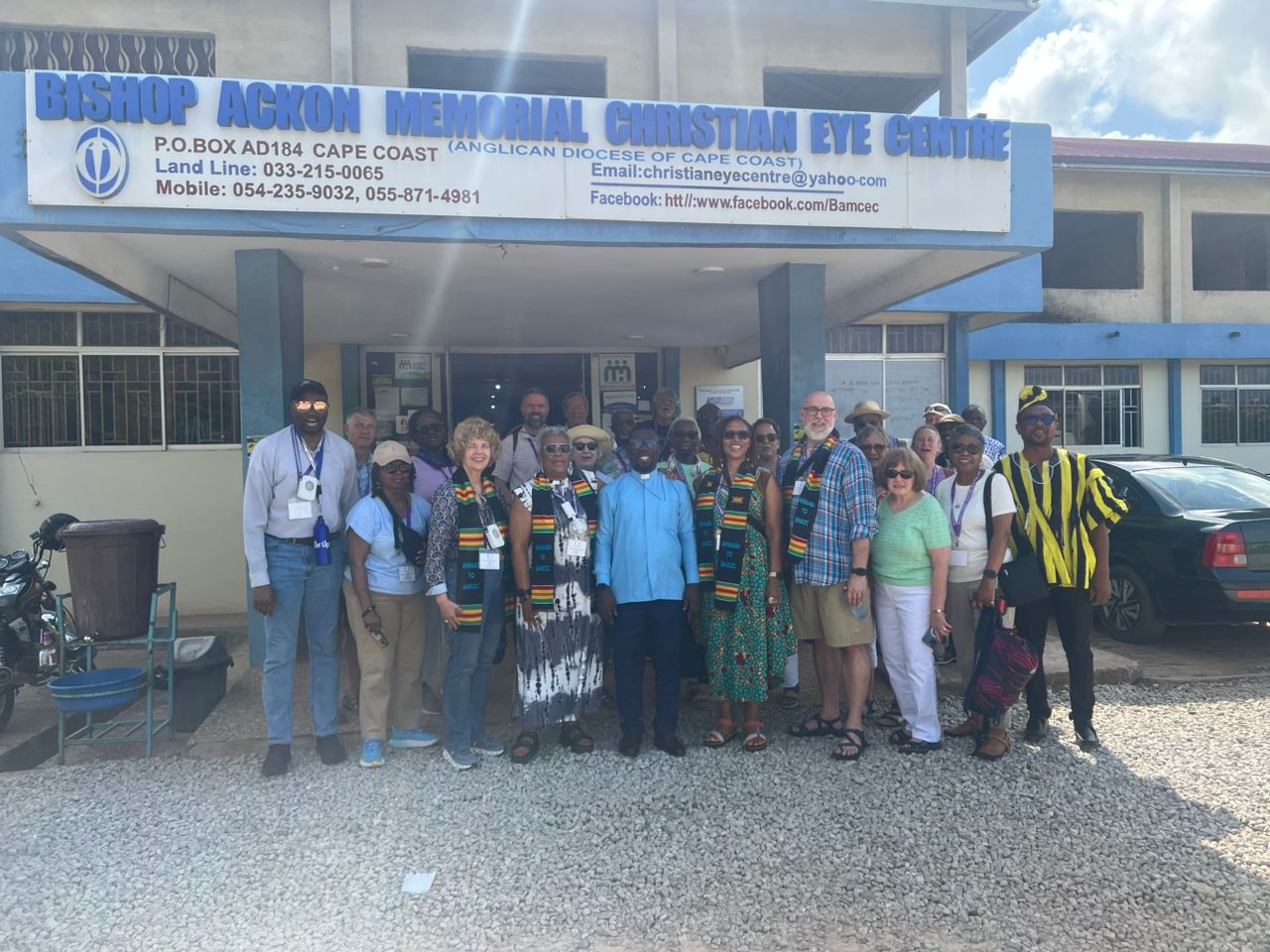
Wright noted significant strides in these partnerships, including a compelling presentation from the local Bishop Ackon Memorial Christian Eye Center outlining their five-year strategic plan to expand into a 40-to-50-bed eye hospital by 2028. The clinic’s capacity for community outreach was immediately boosted by the delivery of a Welch Allyn Spot Vision Screener—a gift from St. James in Marietta—along with 2,000 pairs of donated glasses from the Georgia Lions Lighthouse Foundation.
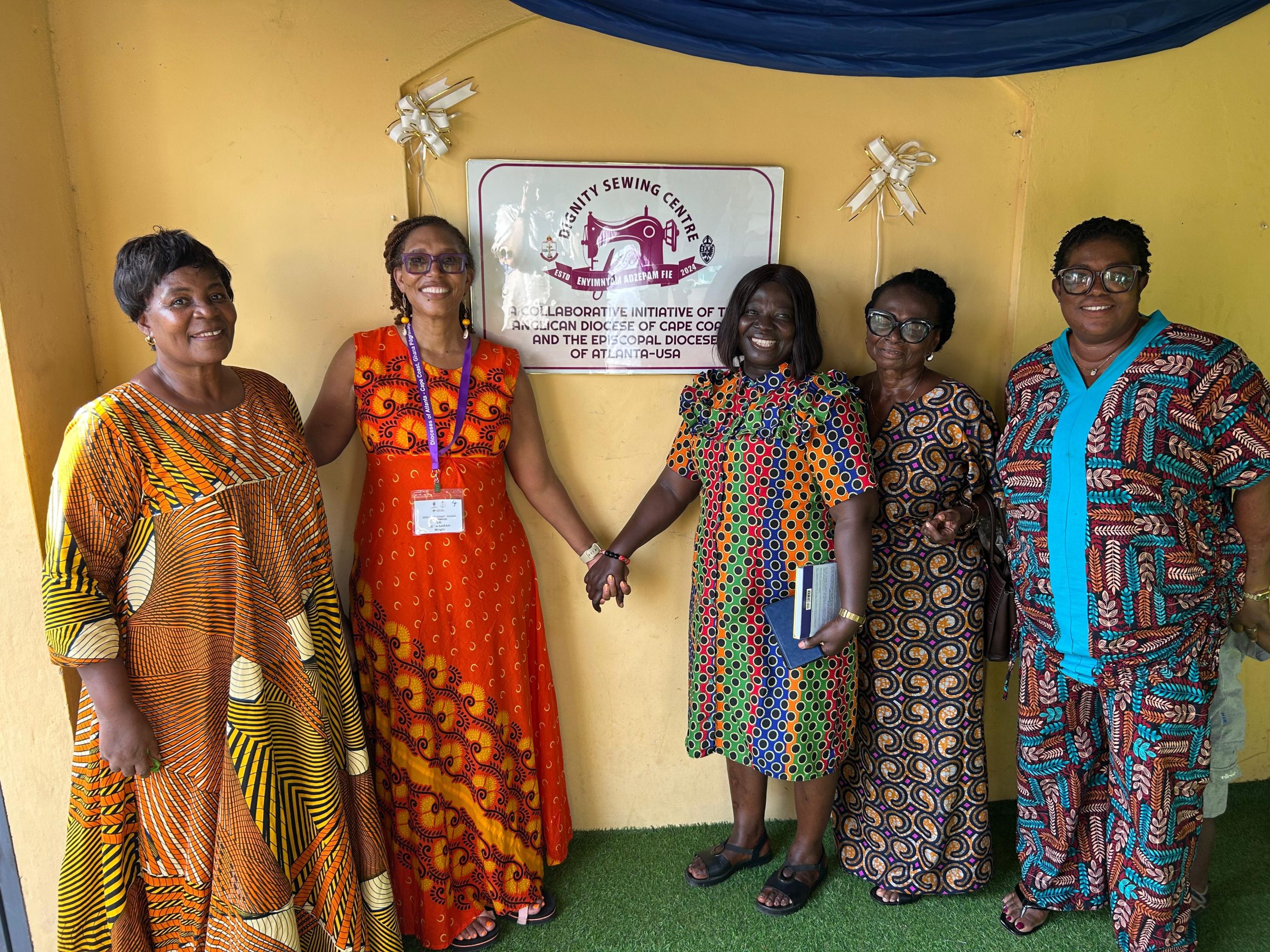
The travelers also celebrated the progress of the Dignity Sewing Centre, a vocational program providing young women with a trade and a purpose.
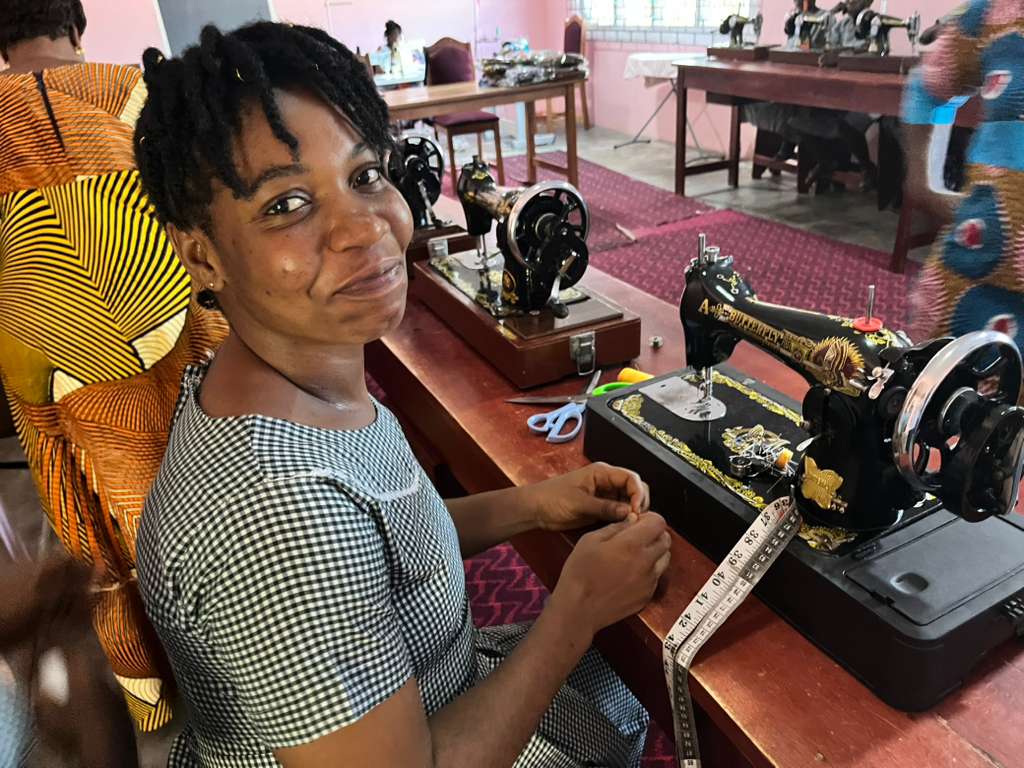
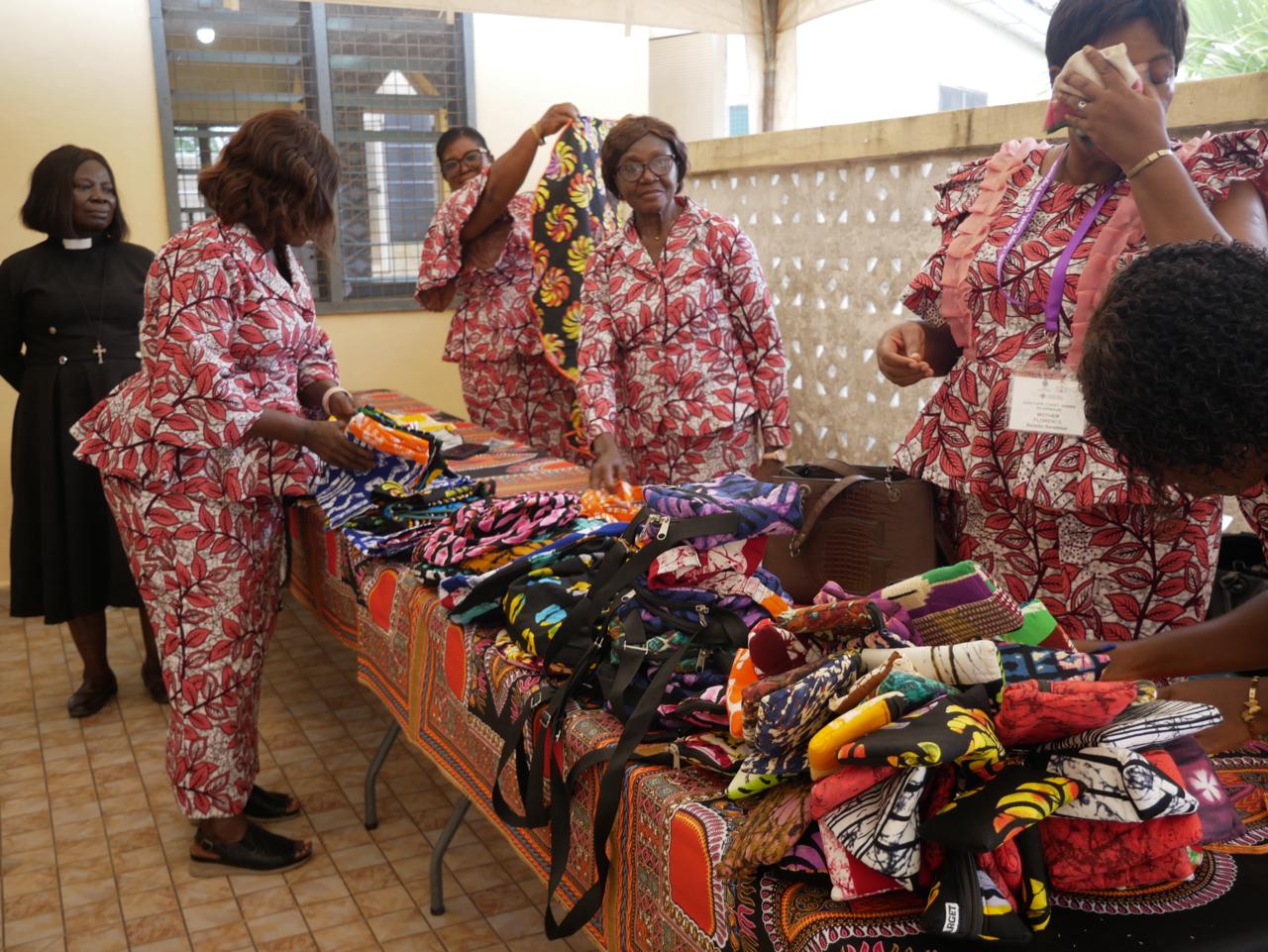
“They are now working toward achieving formal vocational certification status for participants at the conclusion of their training—an important step that reflects both excellence and sustainability,” Wright shared. Later in the trip, the young women put on a vibrant fashion show displaying the custom dresses and shirts they stitched for the group.
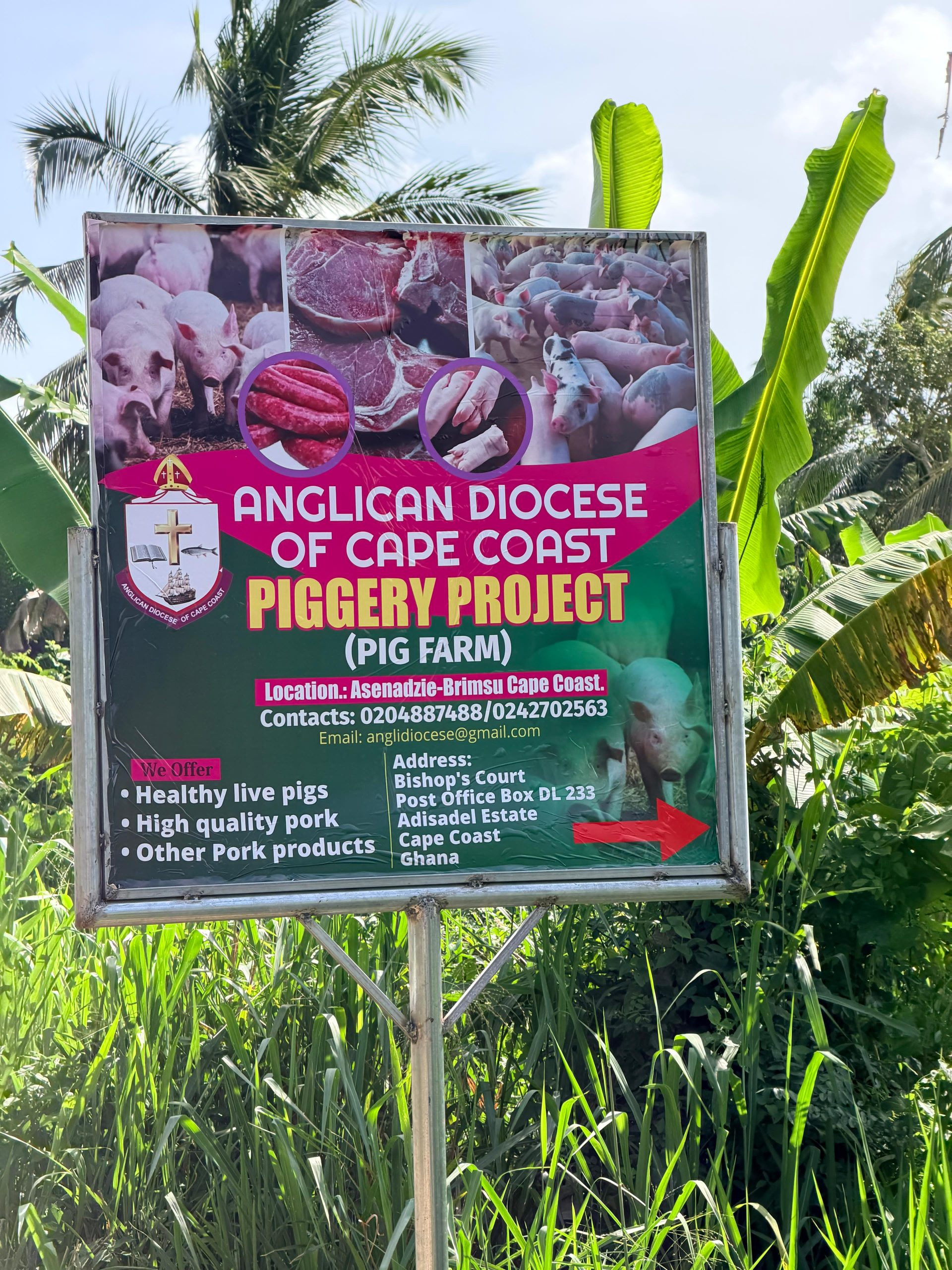
As a tangible example of mutual investment and long-term economic sustainability, the group also reviewed developments at the diocesan piggery. Originally seeded by the Diocese of Atlanta as a global mission, this entrepreneurial agriculture project is generating revenue to fund pensions for aging Cape Coast clergy—benefits that previously did not exist within the diocese.
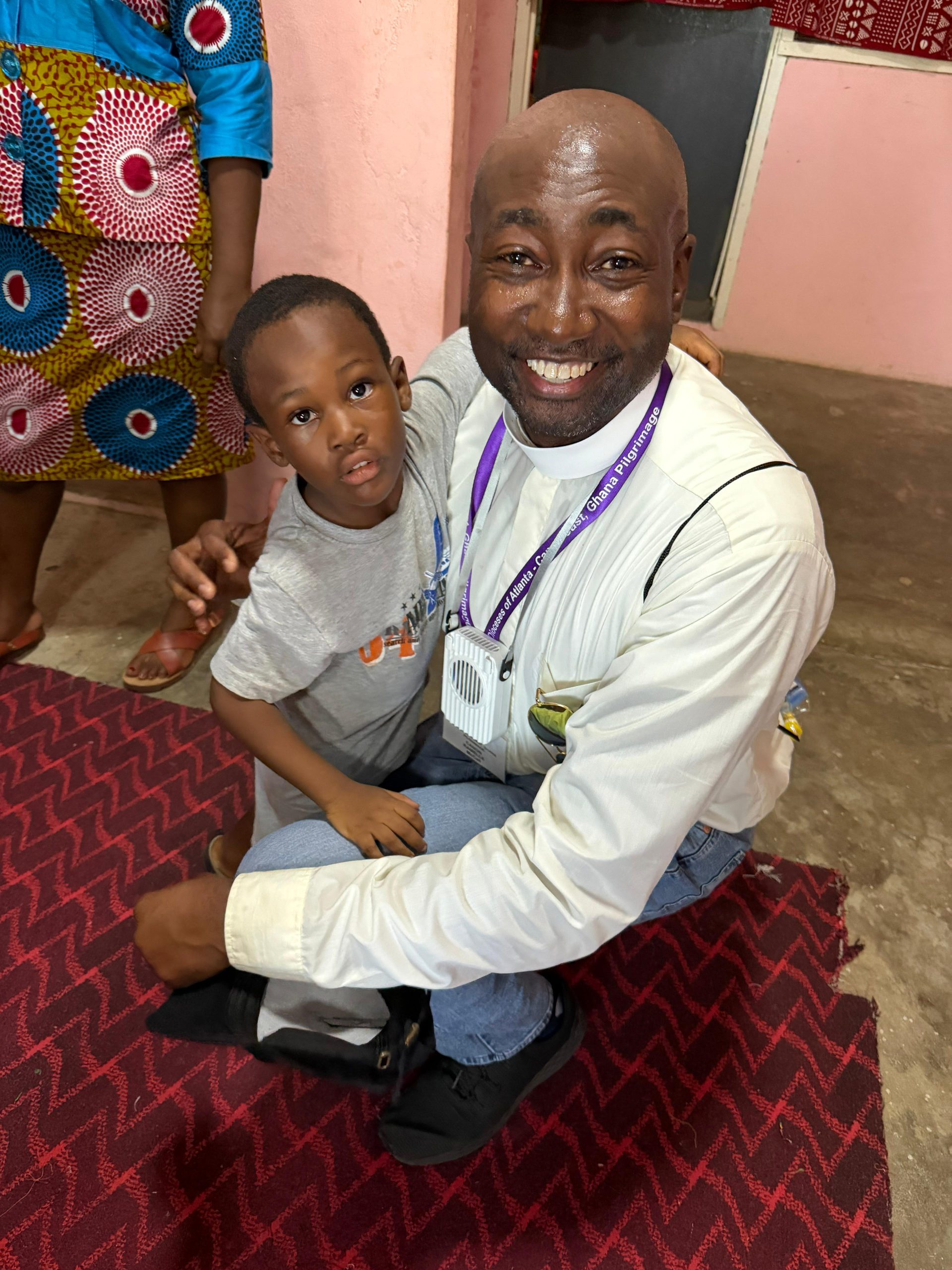
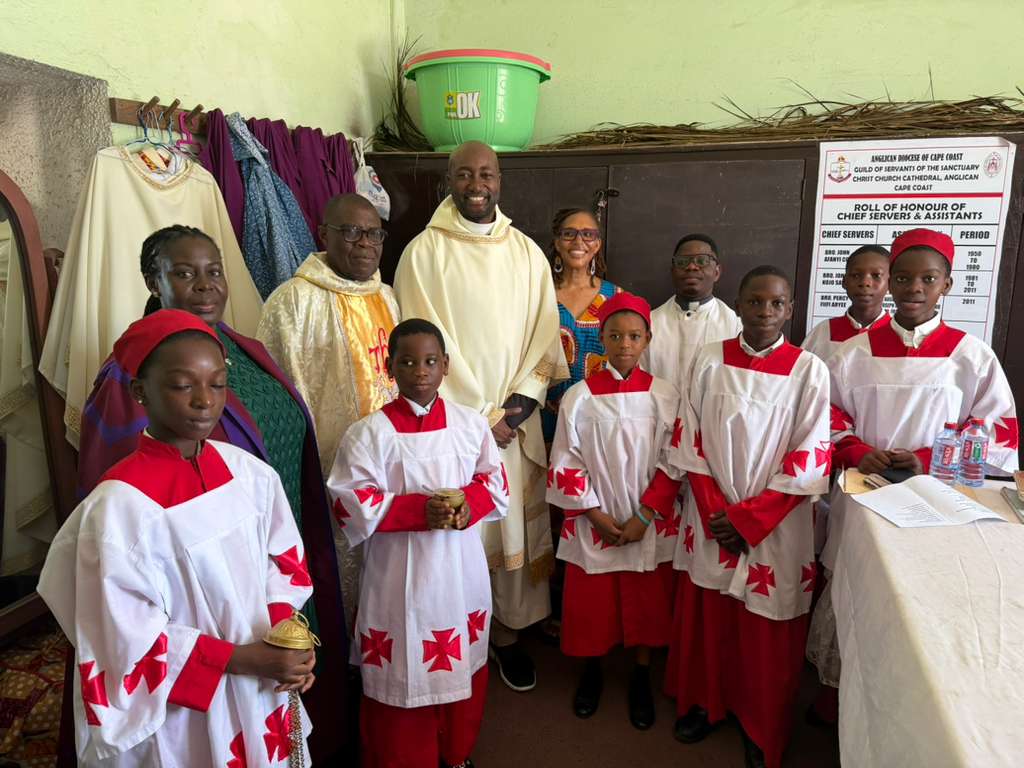
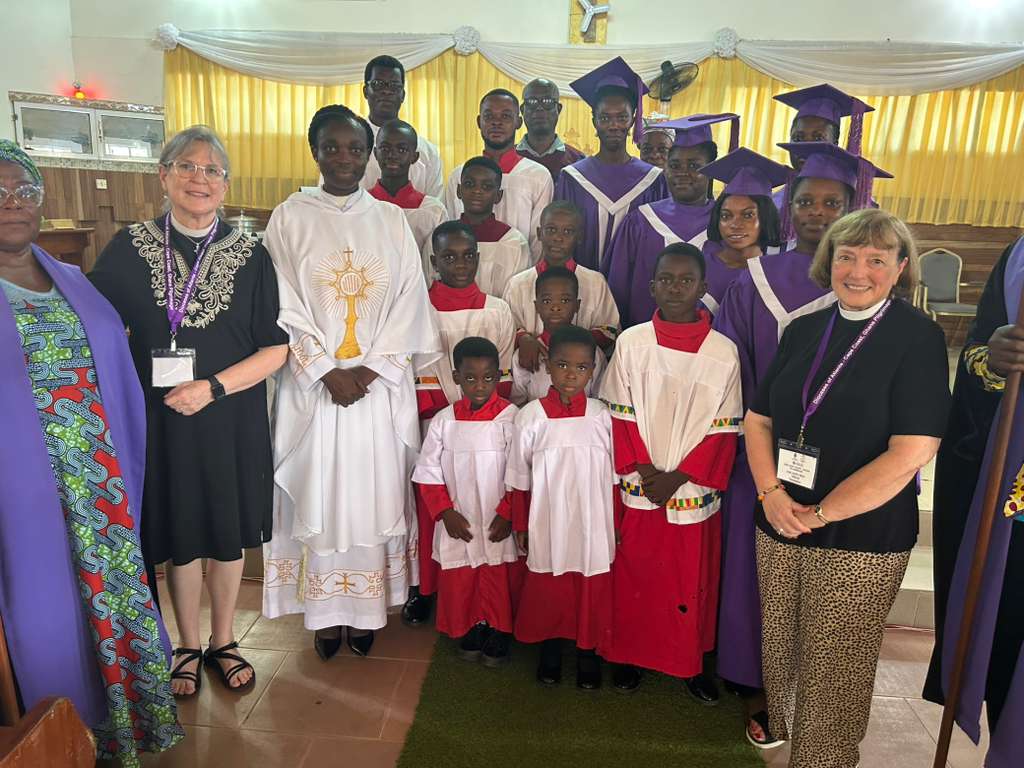
The journey culminated in deeply personal parish visits. Harding and parishioner Bobbie Broussard traveled up nearly 100 steps to visit their companion parish of three years, Good Shepherd in Eguase.
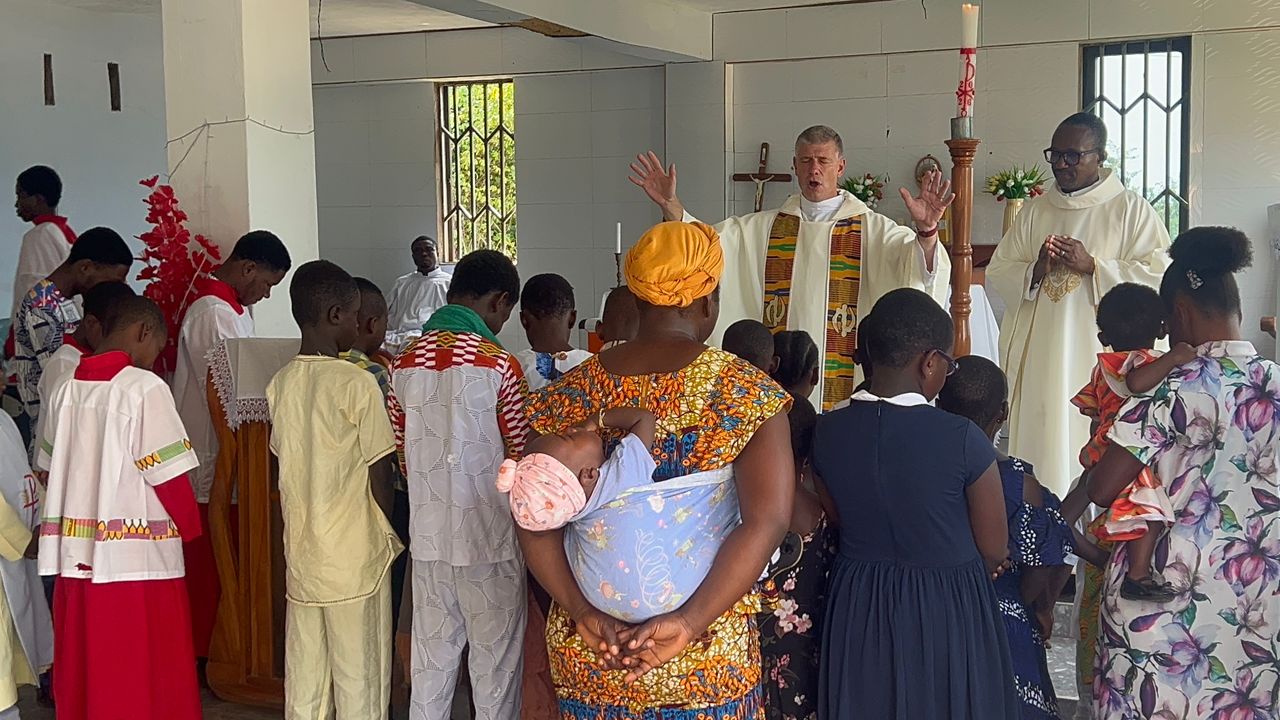
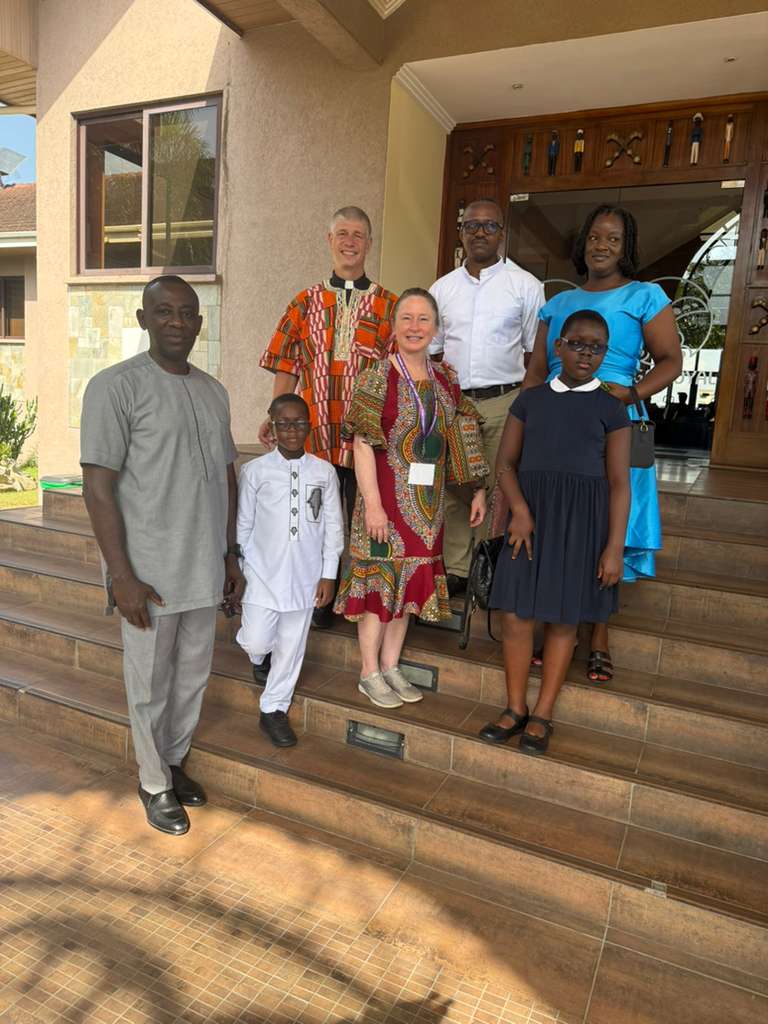
There, Harding assisted at the altar and preached a translated sermon framed by the church’s spectacular, long windows—which were originally funded as a gift from the St. Matthias congregation.
Now that the participants are home, that restoration is spreading into local Georgia and South Carolina communities through a “butterfly effect” of small exchanges.
“My driver home from the airport had researched Ghana and we talked all the way home!” Broussard said. She has since directed people to historical resources like the Legacy Museum in Montgomery and shared Ghana stories with local high school students. “Incredibly thankful for this experience,” she said. “I will continue to share everywhere I go.”
Prophetic Partnerships
As the Center for Racial Healing looks toward future journeys, the theological explorations of the 2026 cohort will influence the foundational curriculum for the diocese.
Woodliff-Stanley noted that the visible ministry of their hosts has directly inspired her own diocesan plans moving forward. “Their work inspired me and compelled me to continue deepening our partnership in South Carolina,” she said. “This trip reminded me that reconciliation is not an abstract idea. It is something we practice together with open hearts, listening spirits, and the willingness to be transformed by encounter.”
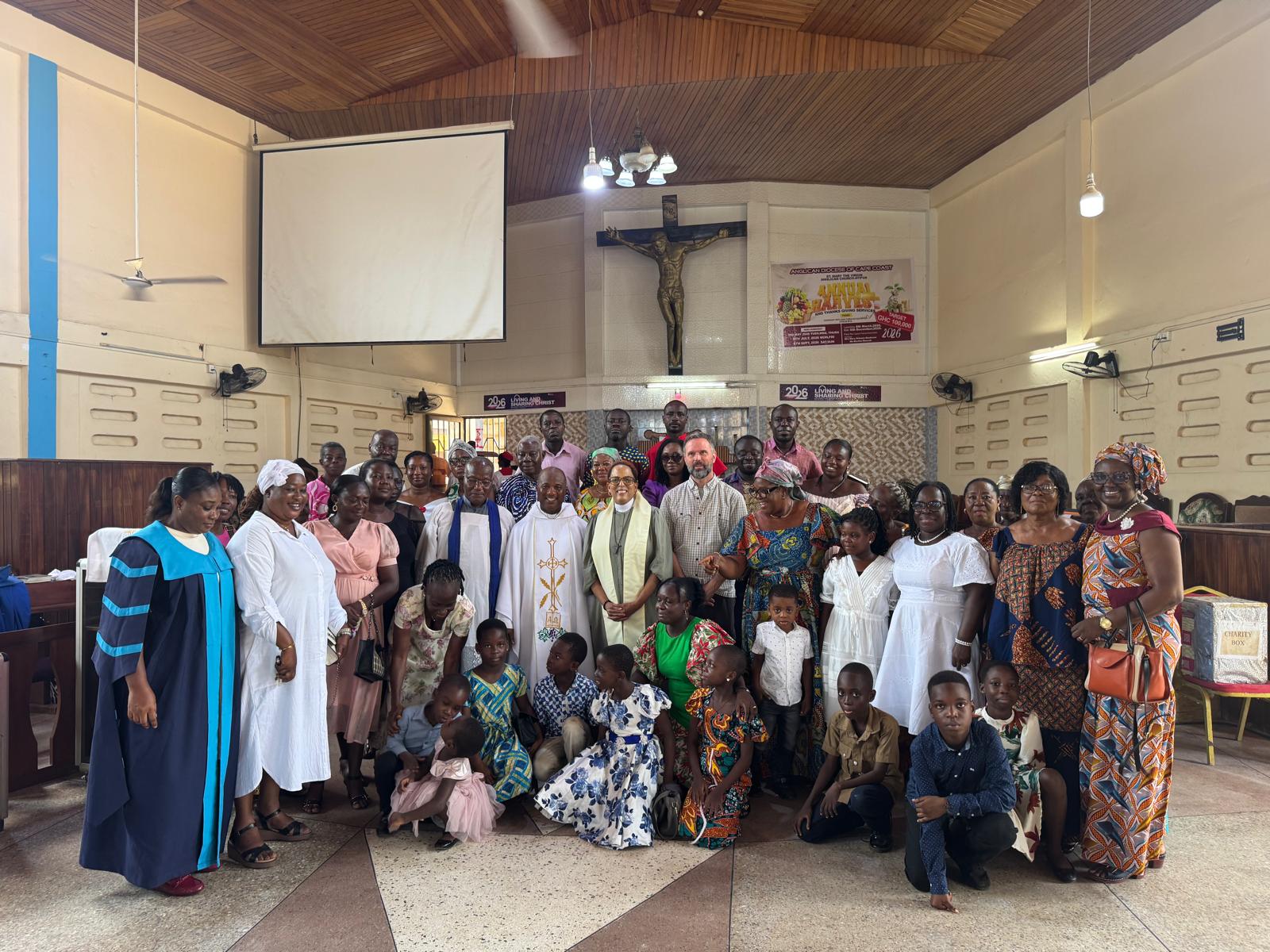
Harding’s film concludes with a final charge from Bishop Victor, who describes the companion relationship between the dioceses as a sacrament—an outward sign of an inward grace. In a global church frequently fractured by internal conflict, Bishop Victor noted that practicing “theological hospitality” and standing together against dehumanization are profoundly prophetic acts.
“I am still processing all that I learned and all that this journey stirred within me,” Thompson reflected. “But one thing I know for certain: we are all called to act… We are called to have the courage to be uncomfortable, because only through discomfort and vulnerability can we experience true love and begin to see all of God’s children as beloved, worthy, and created in the image of God.”
For information on upcoming pilgrimages, contact the Absalom Jones Center for Racial Healing.